
- Can You Actually Use an Echeck at a UK Casino?
- Check the Cashier Before You Choose a Payment Route
- What to Check on a Casino’s Payments Page
- How to Compare Casino Payment Costs
- Real-Money Deposits and Getting Your Money Back
- Before You Make an Echeck Deposit
- Keep Payment Charges and Currency in View
- Why an Echeck Withdrawal May Take Longer
- Using a Casino App: Set Your Limits First
- Use Payment Details That Match Your Account
A casino’s general payment list may not reflect the options available to UK players, so check the cashier and clarify what “echeck” means.
Can You Actually Use an Echeck at a UK Casino?
If you are looking for a UK casino that takes echecks, the sensible answer is to verify the payment option with the casino itself. The specialist casino reviews available for comparison mention familiar routes such as Visa, Mastercard, bank transfer, e-wallets and some cryptocurrencies, but they do not establish which UK-facing casinos currently accept echecks. A general payments list is not proof that this particular method is available.
That distinction matters. A review may describe a casino’s wider payment range without confirming what a UK customer sees after signing in. Payment options can depend on the customer’s country and account, and a method mentioned somewhere on a site may not be offered to every player. So I would not treat a broad claim about a casino’s payment methods as confirmation that you can make an echeck deposit there.
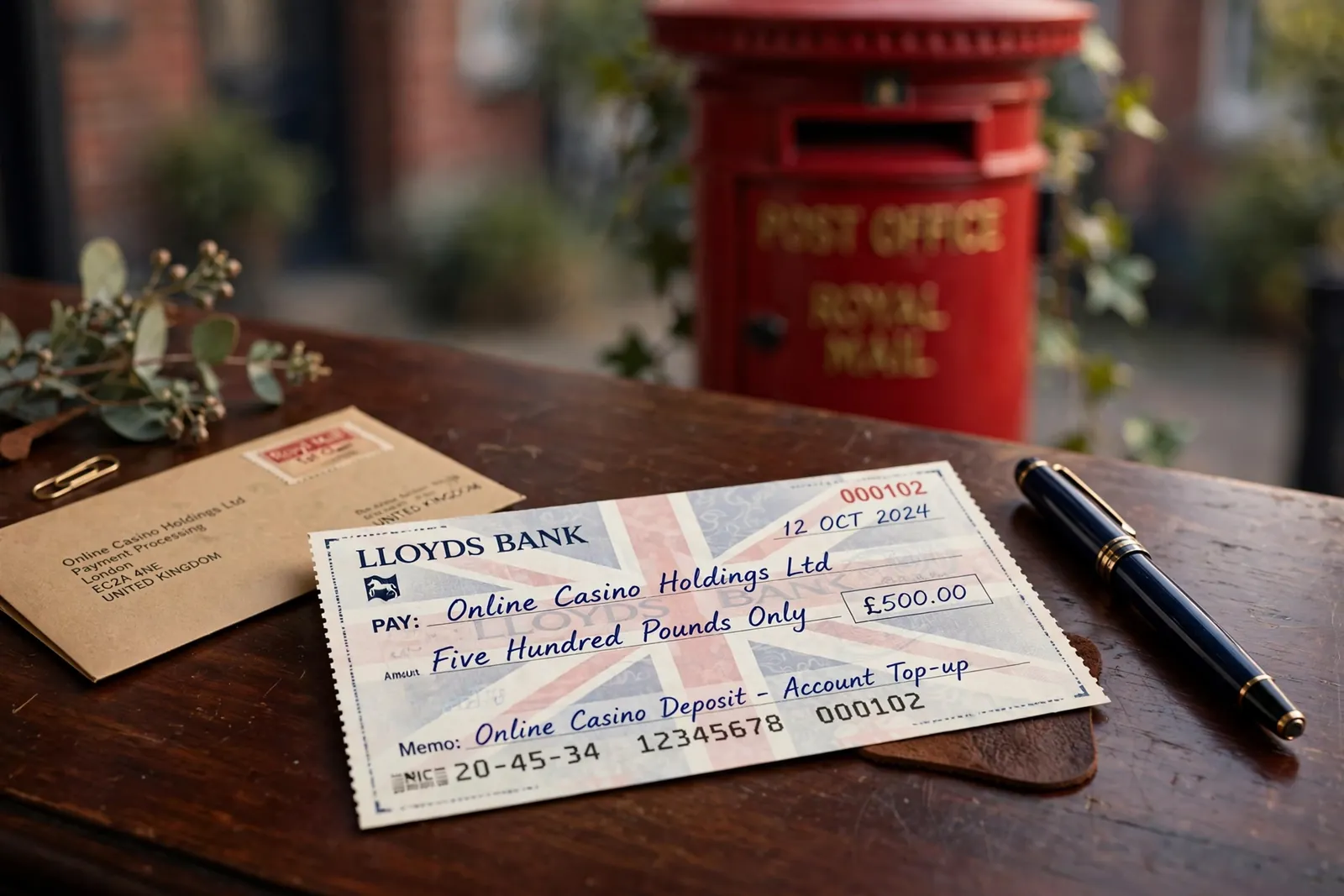
The word itself can also be unclear. If a casino or payment provider uses “echeck”, check what route it means rather than assuming it is another name for a bank transfer or an open-banking payment. Similar-looking labels do not guarantee that the transaction is handled in the same way. The cashier should name the available method and show whether it applies to your UK account.
This is why lists headed “casinos accepting echecks” deserve a careful read. A list can repeat an old payment description, cover a market other than the UK, or use “echeck” loosely. Unless the operator’s own cashier confirms the option for you, the claim is not enough to rely on. A neat list is not the same as a working payment route.
There is a second trap with card logos. Specialist review pages may list Visa and Mastercard, but that does not confirm current UK availability or that every card product is eligible. The cashier is where you need to check the method offered to your account. Also, UK-licensed casinos cannot accept credit-card payments for gambling; the regulator’s ban took effect on 14 April 2020 and remains in force. A card logo is not an invitation to use a credit card.
Casinos that accept Ethereum in the UK: what to check
If echeck is absent from the cashier, do not assume a bank transfer option is a substitute. It may be another way to move money, but it is not automatically the same method. The same applies to e-wallets and other payment labels: their presence in a general review does not confirm that they will work for your account or that they are echecks.
For a practical check, open the casino’s cashier while logged in and look for the exact payment name. If it is unclear, ask customer support whether the method is available to UK customers and whether the cashier supports it for your account. Keep the answer specific: you want confirmation of the route you intend to use, not just a broad assurance that the casino supports online payments.
I would also separate “echeck deposits” from a claim that the casino accepts echecks at all. A payment method may be offered for one transaction direction but not another. Before treating it as a usable option, confirm whether the operator permits both deposits and withdrawals through that method. That is a separate point from whether its name appears on a marketing page.
Casinos That Accept MuchBetter in the UK
The available comparisons do offer a useful starting point: they show that casino payment pages may list cards, bank transfers, e-wallets and cryptocurrency. They do not settle the specific question of which UK casinos accept echecks. That gap is not a reason to guess. It is a reason to check the operator’s live cashier before choosing a site or planning a deposit.
For now, treat “echeck casino” as a claim to verify, not a category you can safely pick from a list. A UK-facing casino may support other payment routes, but only the option shown for your own account confirms what you can actually use. The distinction is small on a webpage. It matters at checkout.
Check the Cashier Before You Choose a Payment Route
A payment method shown on a casino’s general information page is not necessarily available to every customer. The cashier is the practical check: it shows the routes offered to your account when you are signed in and have selected the UK as your country. If you are comparing echeck online casino sites in the UK, don’t treat a logo or a broad payments list as confirmation that you can use echeck there.
Do
- Sign in and open the cashier
- Check for the exact payment label
- Verify the country and currency settings
Don’t
- Rely on a logo or general list
- Assume bank transfers are echecks
- Enter details based on an assumption
I check the cashier before I decide how I’ll pay, not after I’ve built a plan around a method. Availability can depend on where the account is registered, the payment provider, and the direction of the transaction. A method might appear for deposits but not for withdrawals, or it may be absent from a particular UK account altogether. The only useful answer is the one the operator gives for your account.
Check the account you will actually use
Sign in and open the cashier, then look for the payment methods available to your account. Make sure the country and currency settings are correct; a page aimed at customers elsewhere does not establish what a UK customer can use. If you are not yet registered, check whether the operator provides a clear UK-specific cashier preview or contact support and ask directly. A general page can help you know what to ask about, but it cannot confirm account-level access.
For echeck, check the exact label rather than guessing from a similar-looking option. A bank transfer, an open banking service and an echeck may involve bank details, but that does not make them interchangeable. If the cashier does not name echeck, ask the operator whether the displayed method is the one you mean and whether it is available to UK customers. Don’t enter bank details or start a transaction on the strength of an assumption.
The same care applies to familiar options. UK casinos commonly accept debit cards, including Visa and Mastercard, but that broad picture is not a promise that every card product will work with every account. The cashier is where you confirm the actual option presented to you. And for gambling deposits at UK-licensed casinos, credit-card payments are not permitted; a card appearing in someone’s general list does not change that.
Casinos That Accept Tether in the UK: What to Check
Check both directions
A payment method is not a complete route just because it accepts a deposit. Before choosing it, establish whether the casino also permits withdrawals to that method. Look for separate deposit and withdrawal choices in the cashier, or ask customer support to confirm both. If the answer only covers deposits, you still do not know whether it will suit the full transaction.
This matters especially when a page uses broad terms such as “banking” or “e-wallets”. Those labels can cover different services, and the options for paying in need not match the options for receiving money. A method may be deposit-only, while another may be available in both directions. Don’t infer withdrawal support from a deposit button, or the reverse.
If a payment provider appears in the cashier, read the wording beside it and follow through only far enough to see what the operator actually offers. You should be able to tell whether you are selecting a deposit route or a withdrawal route before you commit. If the wording is unclear, pause and get a direct answer from support. It is a small check that can save a larger annoyance.
Ask a precise question
Support can often settle a mismatch between a general payment page and your cashier. Keep the question narrow: “Is this method available for a UK account, and can I use it for both deposits and withdrawals?” For echeck, include the precise term you mean, since a representative may otherwise answer about bank transfers or another bank-linked service. Save the reply so you can refer to it if the cashier later shows something different.
Choosing a Payment
Step 1: Confirm visibility
Check if your UK account can see the echeck option in the cashier.
Step 2: Verify the method
Confirm exactly what the payment option is to ensure it is an echeck.
Step 3: Check direction
Confirm whether the method supports the specific transaction direction you need.
A specialist review describes open banking and bank transfers as capable of offering instant deposits and fast withdrawals at many sites. Treat that as a pointer for what to investigate, not as confirmation that a particular service is live for your account or works in both directions. Check the cashier and ask about the exact method. Similar names are not a compatibility test.
If you are deciding how to pay with echeck at an online casino in the UK, make the decision in this order: confirm the UK account can see the option, confirm what the option actually is, then confirm whether it supports the transaction direction you need. That is more useful than relying on a “best” or “top” label in a list that may describe a different market or an older cashier. A label cannot log in as you.
When the cashier and the operator’s answer agree, you have a firmer basis for choosing a route. If they do not agree, don’t guess which one is current. Ask for clarification before starting the transaction. Cashiers are less mysterious when you make them answer the right question.
What to Check on a Casino’s Payments Page
A payment logo tells you little about the conditions attached to a transaction. When you are looking at a casino’s payment page, read past the list of methods and find the figures and rules for the route you intend to use. For an echeck deposit, the useful details are the minimum amount, any maximums, and whether those figures apply to your account.
UK Casinos That Accept Boku: Availability and Limits
I would not treat a general payments page as the final word. It may describe the operator’s payment arrangements broadly, while the cashier displays the terms that apply when you are signed in. Check both, and use the more specific information for your decision. If a key condition is absent or unclear, ask customer support before sending money.
Find the minimum for the selected method
The minimum deposit is the smallest amount the casino will accept in a transaction. It can differ by payment method, so do not assume the figure shown beside a card or bank option applies to an echeck route as well. Look for a method-specific minimum on the payments page, in the cashier, or in the relevant payment terms.
A specialist casino review may report minimum deposits in the £10–£20 range, with the amount depending on the method. Treat that as a broad indication, not a promise about a particular casino or an echeck. The live terms for your account are what matter. If the cashier does not show a clear minimum before you confirm the deposit, pause and get the operator to clarify it.
This matters even when you plan to deposit more than the minimum. A payment can be rejected if the amount entered falls below the method’s threshold, and you should not have to guess which threshold applies. Check the currency shown as well, so you are comparing the displayed amount with the amount you intend to enter.
Separate transaction limits from other limits
A maximum deposit limit may apply to one transaction, to activity over a day, or to activity over a month. Those are different restrictions. A page that states a per-transaction maximum does not necessarily tell you how much you may deposit in total over a longer period.
Attention: Maximum deposit limits can vary depending on the payment method and the status of your specific account.
Maximums can also depend on the payment method and the status of your account. Specialist casino reviews describe this kind of variation, but their general summaries cannot establish the limit on your own account. Look for the exact wording in the operator’s terms or cashier, including whether the stated maximum is per transaction or over a defined period.
Check whether the casino presents a limit for the method itself or a limit specific to your account. If you cannot tell, ask support to explain which applies before you make the deposit. Do not assume that a limit shown on a public page will be identical for every customer.
Read the conditions attached to the figure
A number without its conditions can be misleading. Check whether a minimum or maximum applies to each deposit, whether the operator describes a combined period limit, and whether the limit is different for the payment route you selected. Keep the wording in front of you rather than relying on a remembered figure from a review or an earlier visit.
Also note where the information appears. A general payments page, the cashier, and the full terms may not present the same level of detail. If they appear to conflict, do not pick the more convenient figure and proceed. Ask the casino which condition governs your transaction, and keep a record of the answer.
Before confirming, compare the amount you plan to enter with the displayed minimum and maximum. Make sure the limit is stated in the same currency as the deposit amount. If your account or the cashier shows different terms from the public page, use that discrepancy as a reason to stop and clarify, not as an invitation to test the system.
Casinos That Accept USDC in the UK: What to Check
The point is not to find a payment page with the most attractive headline. It is to know the actual amount the operator will accept from you, through the selected method, under the terms that apply to your account. That takes a little reading. Better than a rejected deposit.
Our top casino picks for the UK
- AmunbetBonus: Join now and get 450% up to 2,700 GBP + 450 FS · Payout speed: 1-3 business days
- SpinFormulaBonus: 550% Up To £15,000 + 550 FS · Payout speed: 1-3 business days
- BeOnBetBonus: 100% up to €500 + 100 FS · Payout speed: 1-3 business days
- BritsinoBonus: Welcome Package – Get your £2,200 + 2,000 FS · Payout speed: 1-3 business days
- ZombillionBonus: Welcome Pack 250% up to £4000 + 200 FS · Payout speed: 1-3 business days
- x3betBonus: Welcome Pack 100% Up to £1.000 + 200 Free Spins · Payout speed: 1-3 business days
- NightWinBonus: £900 + 400 free spins · Payout speed: 1-3 business days
- Revery PlayBonus: 100% up to€1,000+ 100 FS · Payout speed: 1-3 business days
- ChanzeBonus: Slots Welcome Bonus #1 200% up to €500 · Payout speed: 1-3 business days
- NightLuckBonus: Welcome Pack + 805% Up To 6400€ + 280 FS · Payout speed: 1-3 business days
How to Compare Casino Payment Costs
There is no payment method I can honestly call the cheapest for every casino and every player. The total depends on the particular transaction: what the casino charges, what the payment provider charges, and whether an issuer, bank or payment network adds a cost. If currency conversion is involved, the exchange-rate spread matters too. A method with no visible casino fee can still cost more overall.
One specialist casino review identifies those charges as separate parts of the payment cost. That is a useful way to compare options, but it is not a universal fee schedule. The amount shown in a cashier may not tell you what your bank or provider will deduct, so check the terms on both sides before deciding.
Compare the same transaction
Start with the amount you intend to move and compare each available route against that same amount. A flat fee and a percentage-based charge behave differently: the flat fee stays the same as the transaction changes, while a percentage charge changes with it. Where a provider does not display its charge until you confirm the transaction, do not treat the cost as zero. Find its current fee information first.
A method with no visible casino fee can still cost more overall if the provider or bank applies its own charges.
Then look at the whole route rather than just the casino’s payment page. The casino may state that it does not charge for a particular method, while the provider or bank may apply its own fee. The reverse is possible too: a provider may show no separate charge, while the casino’s terms explain a payment cost. Neither statement alone settles which route costs less for you.
I would write down each known charge and mark anything you cannot confirm. That makes the comparison more useful than a headline saying “free deposits”. Free at one point in the chain does not necessarily mean free from start to finish.
Watch for costs that are easy to miss
A conversion spread can be less visible than a stated fee. If the payment is converted, compare the rate used with the rate you expected, and check which party is doing the conversion. A small-looking difference in the rate can matter more than a clearly listed flat charge. The same principle applies to network costs: if a payment route uses a network that charges for the transaction, include that cost rather than focusing only on the casino’s wording.
For an echeck deposit, do not assume the label itself tells you the price. The name of the route does not establish whether the casino, the provider or your bank will charge you, or whether conversion applies. Look for the actual terms attached to the payment option and confirm any charge with the relevant provider. If you cannot establish the total before proceeding, you cannot fairly compare it with another method.
Casinos That Accept Click2Pay in the UK: How to Check
Compare what you will actually pay
A sensible comparison is specific, not a ranking copied from a general payment guide. Check the casino’s stated charge, the provider’s current terms, any issuer or bank fee, any exchange-rate spread and any network cost. Then compare the total for your intended transaction. If one part is unclear, treat that as unknown rather than filling the gap with an estimate.
Keep notes of where each figure comes from and whether it applies to your account and transaction. Payment terms can differ between providers and casinos, so a claim about one route elsewhere does not prove that it applies to the option in front of you. This is especially important when a page uses broad wording such as “no fees”: find out what that statement covers.
The cheapest choice is the one with the lowest confirmed total for your own transaction, not the method with the most reassuring label. If a cost is hidden in the exchange rate or charged outside the casino, it still belongs in the comparison. No shortcut here.
Real-Money Deposits and Getting Your Money Back
When you put real money into a casino account, it is worth thinking about the way a later payout may travel back out. In the UK, anti-money laundering rules generally mean that winnings are returned to the payment source used for the deposit. This is often called a closed-loop approach: money goes back along the route it came in on.
That matters if you are considering an echeck. A payment method being available for deposits does not, by itself, tell you that withdrawals can be sent to it. Nor should you assume that a casino will let you choose any destination you like when you cash out. Check the operator’s withdrawal instructions and the payment details shown in your account before you rely on a particular route.
AML Rules
Anti-money laundering rules generally require winnings to be returned to the original payment source used for the deposit.
The original-source rule is not just an administrative preference. Returning funds to where they came from is a common anti-fraud and AML control. It gives the operator a clearer record of the movement of funds. In practice, that can make the payout route less flexible than the deposit route. A cashier may show several ways to pay in, while the available way to receive money depends on the source used.
If you need an alternative destination, expect the operator to ask for further checks. That does not mean an alternative will always be refused; it means you should not treat it as automatic. The casino may need to establish why the usual return route cannot be used and verify the proposed arrangement. Keep the operator’s instructions and any requests for information together, so you can respond through the proper account or support channel.
I would not choose an echeck solely because it appears to suit the deposit. First consider whether the withdrawal instructions explain how funds are returned and what happens if that source cannot receive a payout. If the wording is unclear, ask the casino before depositing rather than trying to resolve a route change after a withdrawal request. A short check up front is less awkward than discovering that your preferred destination is not available.
There is a useful distinction here: the payment route is about where the money goes, not a promise about how quickly it arrives. A payout being directed back to its source does not establish a delivery time. Keep those questions separate, and do not read a deposit option as confirmation of a matching withdrawal facility.
Casinos That Accept Interac in the UK: What to Check
For an echeck casino, the sensible expectation is therefore cautious: find out whether the method is accepted for withdrawals as well as deposits, and understand the original-source policy. If you plan to use another route later, ask what extra verification it may require. The return path matters.
Before You Make an Echeck Deposit
Treat the deposit and the later payout as separate stages. A payment that appears in your casino balance quickly does not tell you how long a withdrawal will take. A specialist review describes card deposits as potentially instant while payouts may take several business days; that is a comparison, not a promise about every casino or payment route.
For an echeck, check the deposit instructions shown for your own account before you submit anything. Do not assume that a method described elsewhere is available to you, or that its deposit timing matches a card’s. The cashier is where you can see whether the option is presented for your account and what the operator says about processing. If the timing is unclear, ask the casino before committing funds.
I would also avoid treating a successful deposit as proof that the whole payment journey will be just as straightforward. Deposits and withdrawals are handled as different transactions, and the time shown for money going in says nothing by itself about money coming back out. Keep the payment confirmation and note any status message the cashier gives you. That gives you something concrete to refer to if the deposit does not appear as expected.
The practical point is simple: make your decision based on the deposit information in front of you, not on a general claim about speed. If you need the funds to be available by a particular time, do not rely on an unconfirmed estimate. Check first.
Before Depositing
- Check the deposit instructions for your own account
- Verify the payment option is presented in the cashier
- Confirm the processing timing with the operator
- Save the payment confirmation and status message
Keep Payment Charges and Currency in View
A payment can show no separate fee and still cost more than you expect. If the casino account is set to a currency other than pounds sterling, the payment may be converted on the way in. The exchange rate can include a spread: the difference between the rate used for the transaction and a reference rate. A specialist payment review notes that this difference can outweigh a visible flat charge. The point is not that every conversion will do so, but that the fee line alone does not tell you the full cost.
Before using an echeck or another payment route, check the currency shown in your casino account and in the cashier. Do this before confirming the transaction, not after money has moved. If the account is in GBP and your payment is also made in pounds, you can avoid a conversion between those currencies. Your bank or payment provider may still apply its own charges, so check its terms too.
Payment pages reviewed by a specialist source list GBP as supported, but that does not tell you what currency an individual account is set to. Confirm the setting directly in your account or ask customer support if it is unclear. A payment method appearing in the cashier is not, by itself, confirmation that your account will be charged in pounds.
For a fair comparison, look at the amount that will leave your account and the amount the casino will credit, both in their displayed currencies. If either side is shown in another currency, find out who performs the conversion and which rate applies. Keep a record of the figures before you authorise the payment. Small print is easy to miss when you are focused on completing a deposit.
Casinos That Accept iDEAL in the UK: Payment Guide
This is a currency check, not a promise that a particular echeck route is available or fee-free. Confirm GBP first. Then decide.
Why an Echeck Withdrawal May Take Longer
An echeck withdrawal is not necessarily on its way as soon as you press the button. The casino has its own approval stage, and that can add time before the payment is released. A specialist casino review notes that processing can take longer on a first withdrawal while the operator completes verification. The actual wait depends on the casino’s process and whether your account is fully verified.
That distinction is easy to miss: a payment estimate may describe the transfer after approval, not the time the casino takes to review your request. I would check what the estimate includes before relying on it. If the wording is unclear, ask support whether the stated timing begins when you request a withdrawal or when the casino approves it.
KYC can be the sticking point if the casino still needs to confirm account details or review documents. Check your account for verification requests and follow the operator’s instructions. Sending information through the requested channel can help avoid an unnecessary pause; repeated messages or duplicate documents may not speed up a review.
If a withdrawal is still pending, look for its status in your account and ask support whether anything remains outstanding. Keep the response and any reference details. That gives you something concrete to follow up with, rather than guessing whether the delay is in the casino’s review or later processing.
Why payouts may be delayed
Processing can take longer on a first withdrawal while the operator completes verification. Additionally, KYC (Know Your Customer) checks may require you to confirm account details or review documents before the payment is released.
There is no sound basis for assuming that an echeck payout will arrive by a particular time at every UK casino. Treat any displayed estimate as specific to that operator and subject to its approval checks. First withdrawals can be slower. Plan accordingly.
Using a Casino App: Set Your Limits First
Whether you open a casino in an app or use its website, the important step comes before your first deposit: setting a financial limit. UKGC rules require remote gambling operators to prompt new customers to do this before they deposit. The prompt is part of the account setup, not an optional extra to ignore and revisit later.
I’d treat that moment as a chance to decide what you can afford to spend, rather than picking a figure just to get through the screen. A limit is most useful when it reflects your own budget and stays separate from money needed for bills or other essentials. If you are unsure what to set, pause before depositing; there is no need to rush the decision.
The operator must also make account-level limit controls accessible. Look for them in the account or safer-gambling settings, whether you signed up through an app or a browser. If you cannot find the controls, check the help pages or contact customer support before adding funds. An app’s layout may differ from the website, but your access to these controls should not depend on which channel you use.
A casino app does not change the basic point: the limit belongs to your account, so it is worth checking that you can find and manage it after setup. I’d also make a habit of reviewing it when your circumstances change, rather than treating the first choice as permanent. Keep the decision deliberate.
This is separate from choosing a payment route. A payment method appearing in an app does not tell you whether the limit controls are easy to find, and setting a limit does not confirm that any particular method is available there. Take care of the account controls first, then consider whether you want to proceed.
Ukash at UK Casinos: Is It Still Accepted?
Use Payment Details That Match Your Account
When you set up an echeck casino account in the UK, keep the names and ownership details consistent. The casino account should be yours, and the payment account or route should belong to the same person. That simple match can prevent avoidable questions about who is funding the play.
I’d check this before making a deposit, not after a payment has been queried. Use your own name and accurate account details, and make sure the information you enter at the casino agrees with the details held by your payment provider. A spelling difference or an account belonging to someone else can make the connection less clear.
This is not a way around the casino’s checks. Remote gambling licensees have to verify customers, and they may ask you to confirm account ownership. If something does not line up, be ready to provide the information they request through the casino’s official process. Don’t send payment details through an unofficial message or to someone claiming they can clear a transaction for you.
For a straightforward record, I’d use one named account consistently for deposits and withdrawals where the cashier permits that route. It is easier to follow than switching between accounts, and it keeps the transaction history tied to you. Keep copies of relevant confirmations, but protect them: payment references and account information are not details to share casually.
If you share household finances, pause before using another person’s card, bank account or wallet. Permission alone may not make that route acceptable under the casino’s rules, and it can leave ownership unclear. Check the operator’s terms and ask its support team before trying it.
The same basic care applies to an echeck. Confirm that the payment account is yours and that its details match your casino profile; don’t assume a shared or third-party account will pass review. Clear ownership is a small check, but it can save a needless headache.
Why must withdrawals return to the deposit method?
Returning the money to the original payment source is a common anti-fraud and anti-money-laundering control. Using an account and payment method in your own name can also help avoid ownership-related delays.
Can I deposit in GBP?
Yes, GBP is supported. Check that your account is set to GBP before your first transaction to avoid currency conversion.
What is the current minimum deposit?
The minimum deposit usually starts at £10–£20, depending on the payment method.
Which payment methods are accepted in Great Britain?
UK casinos commonly offer debit cards such as Visa and Mastercard, alongside options that may include PayPal, bank transfer or open banking, e-wallets and prepaid vouchers. Check your logged-in cashier to see which methods are available for your account.
Are Visa and Mastercard deposits definitely debit cards?
No. A Visa or Mastercard logo does not confirm which card products are eligible, so check the cashier for your account. UK-licensed casinos cannot accept credit-card payments for gambling.