
- Why the Licence on Your Casino Actually Matters
- Curaçao: The LOK Reform and What It Changed
- Malta Gaming Authority: The Industry Benchmark
- Gibraltar: The Closed-Door Regulator
- UKGC Licensing: The Baseline for Comparison
- Licence by Licence: How They Compare
- Choosing a Casino by Its Licence
- What Your Casino’s Licence Actually Guarantees
Why the Licence on Your Casino Actually Matters
Every online casino displays a licence number somewhere in its footer. Most players scroll past it. That small string of digits, though, determines everything that happens when something goes wrong — whether your funds sit in a segregated account or the operator’s general pool, whether a regulator will actually investigate your complaint, and whether the platform had to pass any meaningful checks before going live.
For UK players using casinos outside the GamStop self-exclusion network, the licence behind the site is the single most important variable. A UKGC licence comes with a thick layer of statutory protections: mandatory responsible gambling tools, affordability checks, advertising restrictions, and a complaints process with real teeth. Step outside that framework, and the protections you get depend entirely on which jurisdiction issued the licence — and how seriously that jurisdiction takes enforcement.
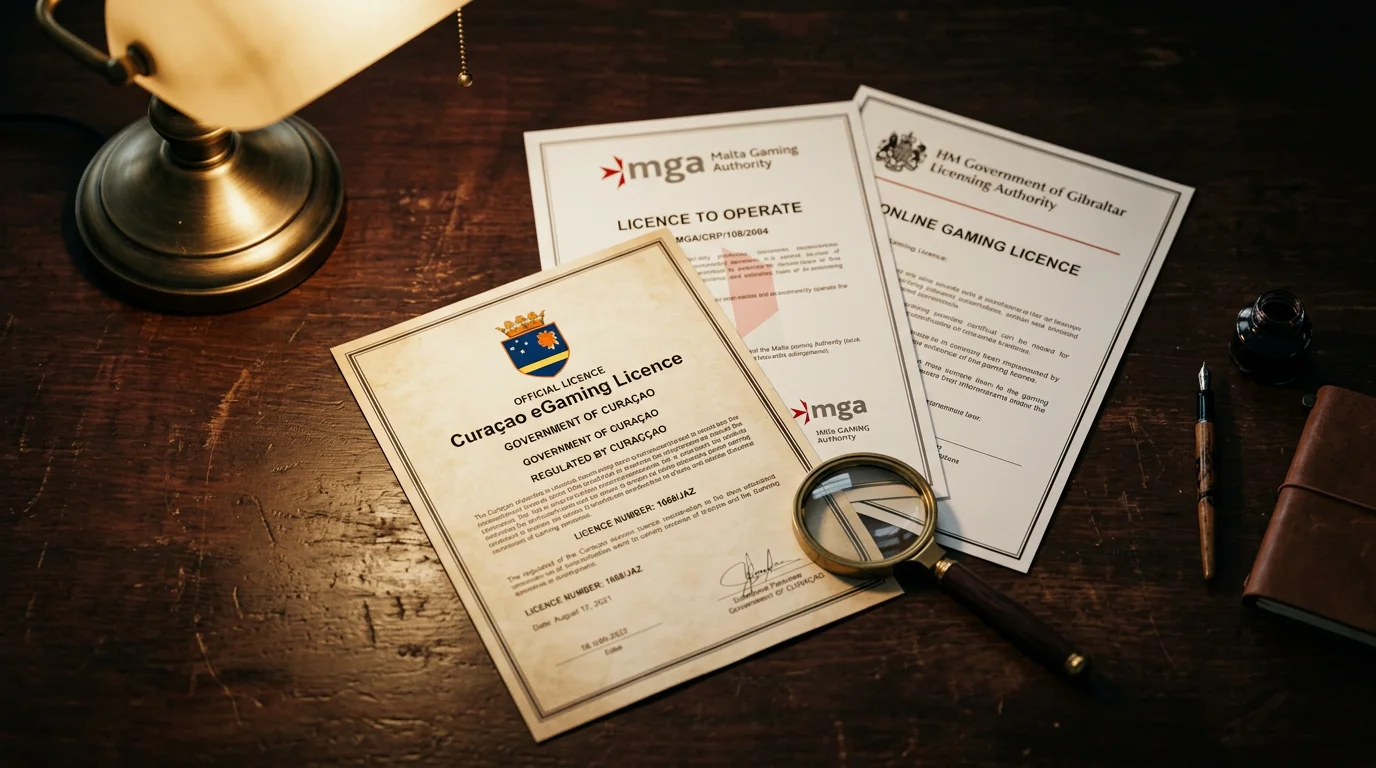
Three names dominate the offshore licensing landscape: Curaçao, Malta (via the Malta Gaming Authority), and Gibraltar. Each operates under different legislation, charges different fees, imposes different obligations on operators, and offers players vastly different levels of recourse. Understanding these differences is not an academic exercise. It is the most practical thing you can do before depositing a single pound at a non-GamStop casino.
This guide breaks down each licensing regime — costs, tax structures, enforcement track records, player protections — so you can assess what a given licence actually guarantees and where the gaps lie.
Our top casino picks for the UK
- AmunbetBonus: Join now and get 450% up to 2,700 GBP + 450 FS · Payout speed: 1-3 business days
- SpinFormulaBonus: 550% Up To £15,000 + 550 FS · Payout speed: 1-3 business days
- BeOnBetBonus: 100% up to €500 + 100 FS · Payout speed: 1-3 business days
- BritsinoBonus: Welcome Package – Get your £2,200 + 2,000 FS · Payout speed: 1-3 business days
- ZombillionBonus: Welcome Pack 250% up to £4000 + 200 FS · Payout speed: 1-3 business days
- x3betBonus: Welcome Pack 100% Up to £1.000 + 200 Free Spins · Payout speed: 1-3 business days
- NightWinBonus: £900 + 400 free spins · Payout speed: 1-3 business days
- Revery PlayBonus: 100% up to€1,000+ 100 FS · Payout speed: 1-3 business days
- ChanzeBonus: Slots Welcome Bonus #1 200% up to €500 · Payout speed: 1-3 business days
- NightLuckBonus: Welcome Pack + 805% Up To 6400€ + 280 FS · Payout speed: 1-3 business days
Curaçao: The LOK Reform and What It Changed
For years, a Curaçao licence was the easiest ticket into the online gambling industry. The old system worked through master licences: a handful of holders could issue sub-licences to virtually anyone willing to pay, with minimal oversight and no standardised compliance framework. It made Curaçao the jurisdiction of choice for operators who wanted to launch quickly and operate with few restrictions. It also made it a magnet for questionable platforms that had no business handling player funds.
That era is over — at least on paper. On 17 December 2024, the Curaçao parliament passed the Landsverordening op de Kansspelen (LOK), replacing the decades-old regulatory framework with a structured licensing regime. The vote was 13 to 6 in favour. The law took effect on 24 December 2024, establishing the Curaçao Gaming Authority (CGA) as the island’s dedicated regulator — the first time a single body has held that role.
The Two-Phase Licence
Under the LOK, operators must now apply through a two-phase process. The initial phase covers a suitability assessment: background checks on beneficial owners, proof of financial stability, technical audits of the platform. Only after clearing this stage does the CGA grant a provisional licence. Full licensing follows once the operator demonstrates ongoing compliance — responsible gambling tools, anti-money laundering procedures, data protection standards.
The financial barrier has risen substantially. A B2C licence now costs approximately €47,450 per year (€24,490 in licensing fees plus €22,960 in supervisory charges), with an initial application fee of €4,592. B2B licences come in at around €24,000 annually. These are modest by European standards — the UKGC charges far more — but they represent a seismic shift from the old sub-licence model, where operators could get started for a fraction of that.
What Else Changed
The CGA has also banned the use of foreign licences for operators based in Curaçao. Since July 2025, any company physically operating from the island must hold a direct CGA licence — no more piggybacking on registrations from other jurisdictions. This closed one of the most common regulatory arbitrage strategies in the industry.
One thing that did not change: the tax environment. Curaçao still imposes zero tax on gaming revenue, with a 2% corporate tax rate for companies in designated e-zones. For operators watching the UK’s Remote Gaming Duty climb from 21% toward 40%, that number alone explains why Curaçao remains attractive despite stricter compliance demands.
The transition has not been entirely smooth. The original deadline for existing operators to achieve full LOK compliance was December 2025, but the CGA extended the window by six months for certain licensees still working through the process. Whether this flexibility reflects pragmatism or a sign that enforcement will remain softer than the legislation suggests is something only time will answer.
What This Means for Players
A Curaçao licence in 2026 is a fundamentally different document from what it was two years ago. The CGA now requires operators to maintain segregated player accounts, implement responsible gambling features, and submit to regular audits. That is a genuine improvement. But enforcement history is thin — the CGA has only been operational since late 2024, and there is no established track record of fining or shutting down non-compliant operators. Players at Curaçao-licensed casinos are better protected than before, but they are still relying on a regulator that has yet to prove itself under pressure.
Malta Gaming Authority: The Industry Benchmark
If Curaçao is the jurisdiction reinventing itself, Malta is the one that set the standard everyone else is measured against. The Malta Gaming Authority has been licensing online gambling operators since 2004, making it one of the longest-running regulators in the sector. That head start matters: it means two decades of enforcement precedent, a mature complaints process, and an ecosystem of legal and compliance firms built around the framework.
The scale of the operation reflects its reputation. By the end of 2024, approximately 300 gaming companies held active MGA licences across the European Union, accounting for roughly 10% of the world’s online gambling operators. The MGA itself generated €84.1 million in revenue in 2024, and the industry contributes about 7% of Malta’s gross value added — employing approximately 13,800 full-time equivalents, or around 5% of the island’s workforce. Those figures explain why the government treats regulation as both a public safety function and an economic priority.
Getting Licensed
An MGA licence is not something you pick up on a whim. The application process involves detailed scrutiny of beneficial owners, business plans, technical systems, and financial resources. In 2024, the MGA received 28 applications for new licences and granted only 17. It also revoked 8 licences and imposed €306,250 in fines across 25 enforcement actions. Those numbers paint a picture of a regulator that says no and follows through when standards slip.
The licence itself is issued for a ten-year term — far longer than most jurisdictions — which gives operators stability but also means the MGA relies on ongoing compliance monitoring rather than frequent relicensing cycles. The authority conducted roughly 1,200 due diligence checks in 2024 alone, supplemented by thematic reviews targeting specific risk areas like anti-money laundering and advertising practices.
Tax and Cost Structure
Malta’s tax treatment is one of its key selling points for operators. The gaming tax sits at 5% of gross gaming revenue, but here is the nuance that matters: it applies only to revenue generated from players based in Malta. Revenue from international players — which is the vast majority for most operators — is not subject to gaming tax. Combined with Malta’s corporate tax refund system, the effective tax burden is significantly lower than the headline rate suggests.
Licensing fees are structured in tiers depending on the type of games offered, but they are broadly comparable to — and in some cases lower than — the new Curaçao fees. The real cost of an MGA licence lies not in the fees themselves but in the compliance infrastructure: segregated player funds, responsible gambling frameworks, regular external audits, and the staff to manage ongoing reporting obligations.
Player Protections in Practice
For UK players at MGA-licensed casinos, the practical protections are several steps above what Curaçao offers — even post-LOK. The MGA mandates segregation of player funds from operational accounts, meaning your balance should be recoverable even if the operator goes bust. There is a formal complaints process: players can escalate disputes to the MGA directly, and the authority publishes guidance on expected resolution timescales.
In the first half of 2025, the MGA received 1,720 player complaints and reviewed 75 URLs, flagging 34 as fraudulent sites falsely claiming MGA affiliation. That last figure is worth noting — it confirms both that the MGA brand carries weight (scammers want to fake it) and that the authority actively polices misuse of its name.
None of this makes an MGA licence equivalent to a UKGC licence. Affordability checks are less rigorous, advertising restrictions are lighter, and the complaints process lacks the statutory backstop that UK players are accustomed to. But among offshore options, the MGA offers the most established combination of enforcement credibility and player recourse.
Gibraltar: The Closed-Door Regulator
Gibraltar occupies a peculiar position in the online gambling world. It hosts some of the largest and most recognisable brands in the industry — operators with household names in the UK — yet it is effectively closed to new entrants. The Gibraltar Gambling Commissioner has not been actively issuing licences to new operators for several years, preferring to maintain a small, tightly controlled portfolio of established companies.
This exclusivity is deliberate. Gibraltar’s regulatory model is built on proximity and relationships rather than volume. The territory is barely seven square kilometres, and the regulator operates with the assumption that having fewer licensees means closer oversight. Operators are expected to maintain a physical presence in Gibraltar, with key management and technical infrastructure based locally. That requirement alone filters out the vast majority of applicants who might consider other jurisdictions.
The Regulatory Framework
The Gambling Act 2005 (Gibraltar) — not to be confused with the UK’s identically named legislation — provides the statutory framework. Licence conditions are imposed individually, which gives the Commissioner considerable discretion in setting requirements for each operator. In practice, this means that Gibraltar-licensed casinos tend to operate under bespoke compliance regimes tailored to their specific business models, rather than a one-size-fits-all rulebook.
Player protection standards are among the highest outside the UKGC. Fund segregation is standard, and the complaints process benefits from the small scale of the jurisdiction — there are few enough licensees that the regulator can and does engage with individual disputes. Gibraltar-licensed operators also tend to hold dual licences with the UKGC for their UK-facing operations, which means they are already accustomed to meeting stringent compliance requirements.
Tax Treatment
Gibraltar levies a tax on gambling operators based on a percentage of revenue, with rates that are competitive but not as low as Curaçao’s zero-tax environment. The corporate tax rate is 12.5%, and there is no VAT. For operators with predominantly non-UK revenue streams, the overall tax burden is manageable — but the real attraction of Gibraltar has never been about tax. It is about credibility. A Gibraltar licence signals to players, payment processors, and affiliates that the operator meets a high compliance bar, and that signal has commercial value that offsets the cost differential.
What This Means for Players
If you encounter a non-GamStop casino holding a Gibraltar licence, you are looking at a relatively rare specimen. Most Gibraltar-licensed operators maintain UKGC licences for their UK operations and would therefore be registered with GamStop. The handful that operate outside the GamStop framework while holding a Gibraltar licence tend to be established businesses with long operational histories. Player protections at these sites are robust — fund segregation, dispute resolution, and regulatory oversight are all present. The limitation is simply access: you are unlikely to find many new or niche casinos choosing Gibraltar as their licensing jurisdiction.
UKGC Licensing: The Baseline for Comparison
To understand what offshore licences offer, you need to understand what they are being compared against. The UK Gambling Commission operates the most comprehensive online gambling regulatory framework in the world — and the most expensive for operators.
A UKGC licence requires operators to meet exhaustive conditions before launching and throughout their operational life. The list includes: mandatory responsible gambling tools (deposit limits, reality checks, self-exclusion integration with GamStop), affordability assessments for high-spending customers, strict advertising codes enforced in conjunction with the ASA, full segregation of customer funds, and participation in the industry’s alternative dispute resolution scheme.
Since April 2025, UKGC licensees also pay a statutory Gambling Levy of 1.1% of gross gambling yield for online operators. That levy funds NHS treatment services, prevention research, and the Office for Health Improvement and Disparities. It is a cost that offshore operators simply do not bear, and it adds to a regulatory burden that already includes the Remote Gaming Duty — set to nearly double from 21% to 40% in April 2026.
The UKGC’s enforcement record is extensive. Fines run into the millions for operators that fail compliance assessments. Licence reviews are triggered by intelligence gathering, player complaints, and routine inspections. The Commission has the statutory authority to suspend or revoke licences immediately where it identifies serious failings — a power it exercises regularly.
For players, a UKGC licence provides the highest level of protection available: statutory rights of complaint, guaranteed access to ADR, fund protection in the event of operator insolvency, and the knowledge that the regulator has both the mandate and the resources to act. Everything discussed in this guide about Curaçao, Malta, and Gibraltar needs to be read against that baseline. Offshore licences can offer varying degrees of protection, but none currently match the statutory framework that UKGC licensees must meet.
Licence by Licence: How They Compare
Numbers tell the story more efficiently than paragraphs. The table below puts the four licensing regimes side by side across the dimensions that matter most to players and operators alike.
| Criteria | Curaçao (CGA/LOK) | Malta (MGA) | Gibraltar | UKGC |
|---|---|---|---|---|
| Regulatory body | Curaçao Gaming Authority (est. 2024) | Malta Gaming Authority (est. 2001) | Gibraltar Gambling Commissioner | UK Gambling Commission (est. 2005) |
| Annual licence cost (B2C) | ~€47,450 | Tiered (varies by game type) | Bespoke (not publicly listed) | £5,000–£431,000+ (based on GGY) |
| Gaming tax | 0% | 5% GGR (Malta-based players only) | ~0.15% of turnover (capped) | 21% RGD (rising to 40% April 2026) |
| Gambling levy | None | None | None | 1.1% GGY (from April 2025) |
| Licence term | Provisional → full (details emerging) | 10 years | Individually determined | Indefinite (subject to review) |
| Player fund segregation | Required (under LOK) | Required | Required | Required (tiered levels) |
| Formal complaints process | CGA (newly established) | MGA Player Support | Gambling Commissioner | ADR + UKGC escalation |
| Enforcement track record | Minimal (regulator since late 2024) | Established (fines, revocations, thematic reviews) | Limited public data (small portfolio) | Extensive (multi-million-pound fines, suspensions) |
| Accepts new applicants | Yes | Yes | Effectively no | Yes |
| Responsible gambling mandates | Required (LOK framework) | Required (deposit limits, self-exclusion) | Required (bespoke conditions) | Comprehensive (GamStop, affordability, ad restrictions) |
A few patterns stand out. The cost gap between offshore and UK licensing is enormous, and it widens further when you factor in the RGD and the Gambling Levy. An MGA-licensed operator serving UK players from Malta faces a fraction of the tax burden that a UKGC licensee does — no gaming tax on international revenue, no levy, and lower headline fees. Curaçao takes this further with zero gaming tax entirely.
On player protections, the gradient is clear. The UKGC sits at the top with mandatory, standardised safeguards. The MGA follows with robust but less prescriptive requirements. Gibraltar matches or exceeds the MGA on paper but serves so few non-GamStop players that it is largely theoretical. Curaçao under the LOK has closed the gap significantly, but the CGA’s lack of enforcement history means those protections are untested.
“Illegal gambling is not a static threat. It is adaptive, opportunistic and increasingly embedded in digital ecosystems on the international stage,” noted John Pierce, Director of Enforcement and Intelligence at the UKGC. That assessment applies not just to unlicensed operators but to the broader landscape: as regulatory costs rise in the UK, the incentive structure shifts, and understanding which offshore licences provide genuine oversight becomes increasingly important.
Choosing a Casino by Its Licence
Knowing the theory behind each licensing regime is useful. Applying it to actual decisions requires a slightly different lens. Here is how to think about licence selection when you are evaluating a non-GamStop casino as a UK player.
Start with verification. Every legitimate regulator maintains a public registry or lookup tool. The MGA publishes a searchable list of all active licensees on its website. The CGA is building its registry as part of the LOK rollout. Gibraltar’s Gambling Commissioner lists licensed operators publicly. If a casino claims to hold a licence from any of these jurisdictions and you cannot verify it through the regulator’s own channels, that is the first and most important red flag.
Next, consider what you actually need from the licence. If your primary concern is fund protection — the confidence that your balance is recoverable if the operator shuts down — then MGA and Gibraltar are the strongest options, both requiring genuine segregation of player funds. Curaçao’s LOK now mandates the same, but the enforcement mechanism is untested. If your concern is complaints resolution — having somewhere to escalate a dispute about a withheld withdrawal or a disputed bonus — the MGA has the most established player support function among offshore regulators.
Tax structure matters indirectly. Operators facing lower tax burdens can, in theory, offer better odds, more generous bonuses, or faster withdrawals. Whether they actually do depends on the individual operator, not the jurisdiction. But the cost differential is real: a UKGC licensee paying 40% RGD plus 1.1% levy operates under fundamentally different economics than a Curaçao operator paying nothing. That gap explains much of the offshore market’s appeal to operators — and, by extension, the bonus offers and stake limits that attract players.
Finally, be honest about trade-offs. No offshore licence replicates the full protections of the UKGC framework. Choosing to play at a non-GamStop casino means accepting reduced regulatory oversight in exchange for fewer restrictions on your play — higher stake limits, bonus buy features, no affordability checks. The licence determines the floor of protections you can expect, not the ceiling. An MGA licence sets that floor higher than Curaçao, and Gibraltar higher still, but all three sit below the UKGC baseline.
What Your Casino’s Licence Actually Guarantees
A licence is not a quality certificate — it is a minimum standard. The MGA sets the highest offshore bar with two decades of enforcement history, mandatory fund segregation, and a player complaints process that functions. Curaçao’s LOK reform has transformed what was once the industry’s weakest licence into something credible, though the CGA still needs years of consistent enforcement to build trust. Gibraltar offers excellent protections but is effectively unavailable to new operators, making it a legacy advantage rather than a live option.
The UKGC remains the benchmark, and every offshore licence falls short of it in measurable ways. That is not a reason to avoid non-GamStop casinos entirely — it is a reason to understand exactly what protections you are giving up and what you retain. A verified MGA licence with fund segregation and a complaints process is a materially different proposition from an unverified claim of Curaçao licensing from a site with no regulatory footprint.
Check the licence. Verify it through the regulator’s own registry. Understand what it covers and where the gaps are. That is the minimum due diligence, and it takes less than five minutes.
Disclaimer
This article is provided for informational purposes only and does not constitute legal, financial, or gambling advice. The regulatory information presented reflects the state of affairs as of early 2026 and may be subject to change as jurisdictions update their frameworks. We are not affiliated with any gambling operator, licensing authority, or regulatory body mentioned in this guide. Online gambling carries inherent risks, including the risk of financial loss and potential for gambling-related harm. If you choose to gamble at offshore casinos, you do so at your own risk and outside the protections provided by UK regulation. If you or someone you know is affected by problem gambling, please contact the National Gambling Helpline on 0808 8020 133 or visit GamCare for free, confidential support.
Non-GamStop Casino Licences Explained — More on this topic at casinos not on gamstop.
See also Slots Not on GamStop.