
- Start with the licence, not the welcome banner
- What a casino site’s register entry can—and can’t—tell you
- “Most trusted” depends on where you live
- Real-money play means checks before you start
- Before you install a casino app, check who runs it
- Read casino reviews against the enforcement record
- A quick trust check: licence, self-exclusion and marketing
- Payments and games: check the terms before you play
- Free spins and bonuses have conditions attached
- Fast payouts still start with a withdrawal check
A practical trust check starts with the UKGC register, then looks at operator identity, safer-gambling tools, payments and offer terms.
Start with the licence, not the welcome banner
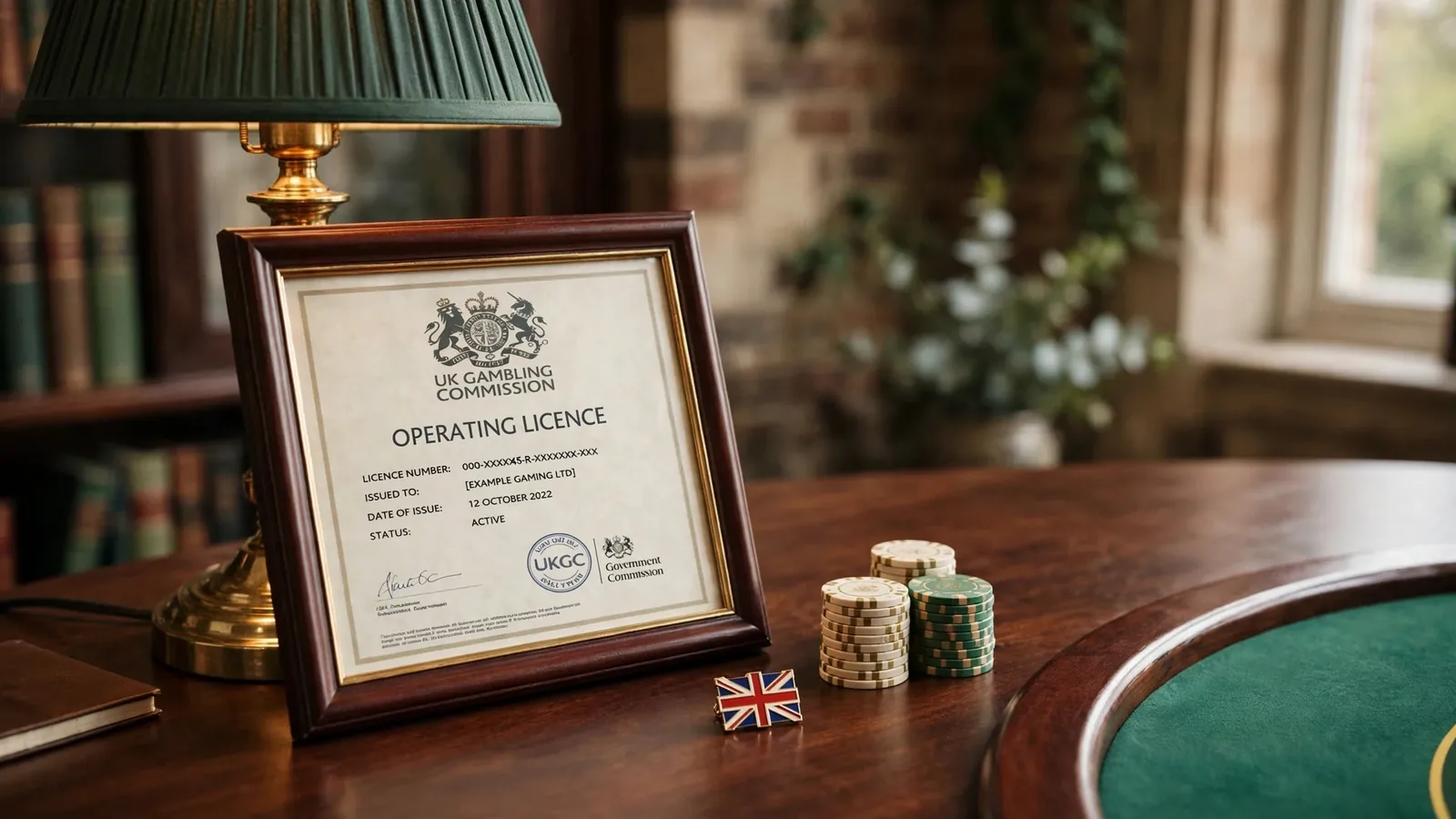
A polished homepage can make a casino feel established before you have checked anything that matters. I start elsewhere: with whether the business has a UKGC Licence for the service it offers to customers in Great Britain. For real-money gambling in England, Scotland and Wales, that licence is a requirement, not a badge an operator can choose to add for reassurance.
The company’s address does not change the basic test. A remote gambling business must have the relevant Gambling Commission licence when it provides gambling facilities to consumers in Great Britain, even if the business is based abroad. A familiar name, fluent British wording or a page showing prices in pounds cannot replace that requirement.
That makes licensing a useful first filter when you are looking for a trusted online casino in the UK. It does not tell you everything about how a particular site handles its customers, and it is not a promise that every experience will be trouble-free. It does establish that the operator is meant to be in the regulated market for the service it is offering here. That is a more solid place to begin than a welcome banner.
I would keep the distinction clear: “licensed” is a threshold, not a synonym for “best”. A site can present itself confidently and still leave you with questions about its terms, customer service or day-to-day practices. The licence does not answer every question for you. It does tell you which basic regulatory condition must be met before a business can lawfully offer real-money gambling to customers in Great Britain.
This matters because trust language is easy to print. Words such as “safe”, “secure” and “trusted” can appear on a page without proving much by themselves. A UKGC Licence is different: it relates to the operator’s permission to provide the relevant gambling facilities in this market. If that starting point is absent, the attractive design and reassuring copy do not fill the gap.
USA Casinos for UK Players: What to Check
There is also no need to treat a company’s overseas base as an automatic answer either way. The important point is not simply where its office is; it is whether it has the required licence to serve Great Britain. A business located outside the country is still subject to that licensing requirement when it offers remote gambling to consumers here. Location is not a substitute for checking the regulatory position.
I find it useful to separate three ideas that casinos often blur together. A brand is what you recognise on the screen. The business is the operator providing the service. The licence is the regulatory permission relevant to that service. They are connected, but they are not interchangeable. A familiar brand name alone does not establish that the relevant operator holds the necessary permission.
The same goes for a confident claim on a homepage. It may prompt you to check further, but it is not the check itself. Start with the regulatory baseline, then assess the other details on their own merits. That order keeps a glossy first impression from doing the work of evidence.
If you are comparing what people call the most trusted UK casinos, resist turning the question into a quick popularity contest. A ranking can tell you what its publisher chose to feature; it cannot change the underlying requirement. The sensible first question is whether the operator has the relevant UKGC Licence for real-money gambling in Great Britain. Only after that does it make sense to weigh the rest of what a site offers.
That is why I would not use “trusted UK online casino” as a conclusion based on appearance, or on a single glowing claim. Treat it as a question to investigate. The licence gives you a clear starting point for that investigation, while the rest of your judgement still needs to come from the details of the service.
Non-UK-regulated casinos: UK rules and risks
It is a baseline, not a verdict. A regulated operator is not automatically the right fit for every player, and a licence should not be read as a blanket endorsement of every decision a business makes. But for a real-money casino serving customers in England, Scotland or Wales, the relevant UKGC Licence is not optional. Begin there. The welcome banner can wait.
What a casino site’s register entry can—and can’t—tell you
A casino brand and the company responsible for its UK-facing service are not always presented as the same name. That is why I would not stop at the logo, the name in the browser tab or a polished welcome page. The useful question is whether the domain you are looking at can be connected to an operator on the UK Gambling Commission’s public register.
A specialist casino review reports that a check of the Commission’s register links 333casino.com to Grace Media (Gibraltar) Limited, operator account 57869, and identifies the domain as a White Label domain. That gives you a concrete relationship to examine: a named website, a named business and an account reference. It is more useful than a brand name on its own, because you can compare the details on the site with the entry for the business responsible for it.
Follow the names, not just the branding
Start with the exact web address. A familiar brand can have more than one domain, and a similar-looking address is not necessarily the one recorded for the operator. Then look for the company name and licence information shown on the casino site. Compare those details with the Commission’s register rather than assuming that a matching logo is enough.
For 333casino.com, the register relationship is not simply “333 Casino has a licence”. It names Grace Media (Gibraltar) Limited and associates the domain with that operator’s account. The White Label description is another part of the entry: it tells you how the domain is categorised in the register. Read the whole relationship, not just the first recognisable name.
Casino Without a UK Licence: What It Means
If the website names a different company from the register entry, pause and work out why before treating the connection as clear. The operator’s terms and contact information can help you identify which business the site says is responsible for the service. A discrepancy is something to resolve, not something to explain away because the brand looks familiar.
Keep the account reference with the operator name when you check. Names can be similar, and a number gives you another detail to compare. In this case, the account reference is 57869. The domain, company and account should make sense together; none of them should be treated as a substitute for the others.
What the entry does not prove
A register entry is evidence of a regulatory connection. It is not a personal recommendation, a score for customer service or a promise that every interaction with the casino will go smoothly. It also does not tell you whether you will like the games, whether a particular promotion suits you, or how quickly a particular request will be handled. Those are separate questions.
The label “White Label” should not be mistaken for an endorsement of the brand’s advertising. It is the register’s classification of the domain’s relationship to the operator. The practical point is that the site name may not be the legal company name you need to look for. If you search only for “333 Casino”, you could miss the operator entry that identifies Grace Media (Gibraltar) Limited.
Nor should a single check become permanent proof. Websites and business arrangements can change. When you are deciding whether to use a casino, check the current register entry and compare it with the domain you actually intend to visit. A saved screenshot or an old review may describe an earlier arrangement; the live register is the place to check the present connection.
Do
- Compare site details with the Commission’s register
- Use account reference numbers for verification
- Check the live register for current connections
Don’t
- Assume a matching logo is enough proof
- Rely on a brand name alone
- Use old reviews as permanent proof
For the same reason, reviews are best used as pointers, not as replacements for the register. A review may tell you which operator name to look up, but the record lets you verify the relationship directly. If two sources give different company names, do not pick the one that sounds more reassuring. Check the domain, the operator details displayed by the site and the Commission’s entry.
A useful test, not a trust verdict
When people ask which online casinos are most trusted, the register can answer one important part of the question: which listed operator is connected to a particular domain? It cannot settle every part of trust for you. I treat the entry as a way to identify who stands behind the brand, then keep that name in mind when reading the site’s terms and other information.
For 333casino.com, the relevant register details are specific: Grace Media (Gibraltar) Limited, account 57869, with the domain recorded as White Label. That is the relationship to verify—not a claim that the brand itself has been judged “best” or “most trusted”. Those labels are conclusions, and a register entry does not make them for you.
Take the extra moment to match the address and the business name. It is a small check, but it prevents a common mix-up: trusting a brand’s presentation without knowing which operator the official record connects to it. The logo is the easy part. The company behind it matters.
“Most trusted” depends on where you live
A casino can describe itself as serving the UK, but that label does not tell you which regulator’s rules apply where you are. The important distinction is between Great Britain and Northern Ireland. They are not covered by the same Gambling Commission remit for remote gambling.
VPN-Friendly Casinos in the UK: What to Know
The Gambling Act 2005 applies to gambling in England, Scotland and Wales. For people in those parts of the country, the UK Gambling Commission is the relevant regulator for remote gambling offered to consumers. That gives a UKGC licence a clear meaning in a Great Britain context: it relates to the regulator responsible for that market.
Northern Ireland sits outside that arrangement. The Commission’s authority over remote-gambling provision does not extend there in the same way. So a statement that a casino is “UKGC regulated” should not be read as proof that the Commission regulates its remote-gambling service for Northern Ireland residents. The wording may sound broad; the regulator’s remit is not.
This matters when you are trying to decide what “most trusted” means. A search for the most trusted online casino in the UK might come from someone in Belfast or someone in Glasgow, but those locations do not lead to the same regulatory answer. A ranking that treats the whole UK as one regulatory area can blur a distinction that affects how you should interpret its claims.
I would start by asking what the claim actually establishes. If you live in England, Scotland or Wales, a statement about UKGC oversight is relevant to the regulator responsible for remote gambling in your area. If you live in Northern Ireland, do not assume that the same statement settles the question. The Commission’s remit is not a UK-wide blanket simply because the word “UK” appears in a casino’s description.
Jurisdiction Difference
The UK Gambling Commission’s remit for remote gambling applies to England, Scotland, and Wales, but does not extend to Northern Ireland in the same way.
That is a jurisdiction point, not a verdict on any particular casino. It does not make a site trustworthy or untrustworthy by itself, and it does not produce a sensible list of the best trusted casino options for every reader. It tells you which regulatory claim applies to your location. The distinction is less glamorous than a top-rated badge, but rather more useful.
The same applies whether you are looking at a desktop casino, a mobile site or an app. A polished phone layout cannot change the regulator’s remit. If a review calls something a trusted mobile casino in the UK, check whether it explains what “UK” means in that context rather than assuming one label covers every nation.
There is no single answer to “what is the most trusted online casino in the UK?” until the location is clear. In Great Britain, UKGC oversight is the relevant regulatory reference for remote gambling. In Northern Ireland, that specific reference does not describe the Commission’s authority in the same way. A list that skips this distinction may still look tidy, but it has left out the part that helps you read its claims properly.
I would treat broad UK wording as a prompt to pin down the geography, not as a substitute for doing so. For a reader in Great Britain, the question is whether the claim concerns the Commission’s role there. For a reader in Northern Ireland, it is whether the claim is being presented accurately despite the different remit. That keeps the word “trusted” tied to something concrete, instead of letting a national label do more work than it can bear.
Merkur Casino Online UK: What to Check
The practical takeaway is simple: where you live changes how a UKGC claim should be understood. It is worth getting that straight before comparing trust claims. A country label is not a jurisdiction check.
Real-money play means checks before you start
A real-money account is not ready for deposits simply because the registration form has accepted your details. In Great Britain, an online operator must check your age and identity before you can deposit or play. That makes verification part of getting started, not a chore you can leave until you want to withdraw.
You need to be at least 18 to gamble online legally with a UKGC-licensed operator. The operator has to establish that you meet the age requirement before allowing money into your gambling account. If a site lets you deposit first and says it will sort out your age later, treat that as a serious warning sign.
In practice, the checks can mean confirming the details you entered and asking for documents. Identity checks commonly involve a passport or driving licence, together with a recent utility bill as proof of address. The point is to connect the account to you, rather than simply tick a box at sign-up. If the information on your account does not match your documents, expect the process to need attention before you can play.
I would get those details right at the start. A typo in a name or address can turn a straightforward check into a delay, and it is easier to correct account information before you try to deposit. Keep any requested documents clear and current, and use the operator’s own account area to submit them. Do not send sensitive identity documents through an informal message or to an address you cannot verify.
Warning Sign
If a site allows you to deposit money before verifying your age and identity, treat this as a serious warning sign.
There is a separate age-based rule for online slots. If you are 25 or older, the maximum stake is £5 per spin. If you are aged 18 to 24, it is £2 per spin. Those caps apply to slots, not to every casino game, so do not read them as a general table-game stake limit. The difference matters if you are comparing a slot’s stake options with other games on the same site.
The lower cap for younger adults is easy to overlook when a game displays several stake buttons. Check the amount shown before each spin, particularly when switching games or changing the stake. A familiar layout does not mean every slot offers the same options. The cap is not a suggestion to spend that amount; it is the maximum permitted stake for the relevant age group.
Verification and stake limits answer different questions. The first establishes whether you are eligible to use the account; the second sets a boundary on what you can stake on online slots. Passing an identity check does not change the stake cap that applies to your age, and selecting a permitted stake does not remove the operator’s duty to check your age before play.
This is also why a welcome offer should not be the first thing you look at when opening an account. Before you consider any promotion, make sure you can complete the required checks and understand the age rules for the games you intend to play. A bonus cannot make an account eligible, and it does not alter the slot limits. The practical order is simple: enter accurate details, complete the checks, then look at the account and game controls before putting money in.
Anjouan Casino Licence in the UK: What to Know
If the site asks for documents, that is not automatically a sign that something has gone wrong. It is part of establishing who is using the account. What matters is that the checks happen before you deposit or play, and that you understand which limits apply to you. Start with eligibility. Then decide whether you want to continue.
Before you install a casino app, check who runs it
A casino app is only another way into the gambling service. Its polished design, app-store listing or familiar logo does not establish that the business behind it is authorised to serve customers in Great Britain. The Gambling Commission regulates remote gambling offered to consumers there, so I start with the operator, not the download button.
Before installing, look at the app’s publisher or developer name and compare it with the operator identified on the casino’s official website. Then check the UK Gambling Commission’s public register for that business and its relevant operating licence. Names can differ between a brand, the company that runs it and the app publisher, so do not assume that a matching logo is enough. If you cannot make the connection clearly, pause and ask the operator through contact details found on its official site.
I also check where the app’s links lead. The sign-in page, help pages and privacy information should make sense as part of the same service. A link that sends you to an unrelated domain, or an app that names no responsible business, is a reason to stop rather than hand over account details. An app-store presence is not a regulatory check.
App Installation Check
- Match the app publisher name with the operator on the official website
- Verify the business and operating licence on the UKGC public register
- Ensure sign-in and help links lead to the correct domain
- Avoid installing apps directly if they are unavailable through an official store
Be cautious with sponsored results and links in messages. They can take you to an app or download page that looks convincing while leaving the operator unclear. I prefer to reach the casino’s official site independently, then follow its own app link and compare the details. If the app is unavailable through an app store and asks you to install it directly, take extra care to verify the source before proceeding.
These checks are especially useful when more than one app uses a similar name or branding. Do not enter personal or payment information just to find out who is behind it. If the operator’s identity and UKGC Licence cannot be confirmed, leave the app uninstalled.
A familiar icon is not evidence. Check the business first.
Read casino reviews against the enforcement record
A casino review can help you understand how a site presents itself, but it is not proof that the operator has met every regulatory obligation. I treat reviews as a starting point: useful for spotting what to investigate, not a substitute for checking public information from the regulator.
The distinction matters because a review may focus on the player-facing experience and say little about compliance. A detailed-looking page can still leave out whether an operator has faced enforcement, what the regulator found, and which part of its conduct was involved. Those details can change how you interpret broad claims about trust or customer care.
Grace Media is a useful illustration. On 26 June 2025, the UK Gambling Commission announced a £60,000 penalty against the company. The case concerned failures relating to self-exclusion and consent for direct electronic marketing. That is more specific than a general label such as “trusted”: it tells you the areas of concern and when the regulator acted. It does not, by itself, describe every part of the operator’s service or tell you what has happened since.
When reading reviews, I look for whether they distinguish a regulator’s finding from the reviewer’s opinion. If a page makes a confident claim about responsible gambling, but gives no indication of what that claim rests on, check the Commission’s published enforcement information yourself. Pay attention to the date and the conduct described; an old case and a current claim are not the same thing, and neither should be blurred into a blanket verdict.
I also avoid treating a penalty as automatic proof that every customer will have the same experience. It is evidence of a specific regulatory action, not a prediction about an individual account. Equally, the absence of a warning in a review is not evidence that no enforcement action exists. Reviews can be selective, and their coverage varies.
So use independent reviews to understand what they actually assess, then compare important claims with verifiable regulatory material. The useful question is not simply whether a reviewer calls a casino trustworthy, but whether the reasoning is clear and stands up to checking. A little less gloss. A lot more context.
A quick trust check: licence, self-exclusion and marketing
Before you sign up, make a short check of three things: the operator’s UKGC Licence, its self-exclusion arrangements and the way it handles promotions. None is a promise that you will never have a problem, but each tells you something concrete about how the service is meant to operate.
-
Check the register before depositing. Search the UK Gambling Commission’s public register for the operator and confirm that the relevant entry is current. Compare the details with the casino you intend to use; a familiar-looking logo or a polished welcome page is not proof. If you cannot establish that the service is covered by the UKGC regime, pause rather than treating uncertainty as a minor detail.
-
Look for self-exclusion information. Online operators in the Commission’s Great Britain regime must participate in GAMSTOP; that requirement has applied since 31 March 2020. Check that the casino explains how self-exclusion works and makes its own account controls easy to find. GAMSTOP is not a decorative badge: it is a practical route to blocking access across participating online operators. If you want to stop gambling, use the service directly and do not rely only on unsubscribing from emails.
-
Review marketing choices before opting in. Casinos must give customers more control over the types of promotions they receive and the channels used to contact them. During registration, look for separate, understandable choices rather than assuming one tick covers everything. If you later change your mind, check the account settings for ways to revise those preferences.
Casino Sites Not Registered with GamStop in the UK
I would keep a note of what you checked and avoid signing up while the operator’s identity or controls are unclear. That is a modest bit of effort, but it is more useful than judging trust by a banner or a stack of promotional messages. If gambling is causing you concern, the National Gambling Helpline is available around the clock on 0808 8020 133.
Our top casino picks for the UK
- AmunbetBonus: Join now and get 450% up to 2,700 GBP + 450 FS · Payout speed: 1-3 business days
- SpinFormulaBonus: 550% Up To £15,000 + 550 FS · Payout speed: 1-3 business days
- BeOnBetBonus: 100% up to €500 + 100 FS · Payout speed: 1-3 business days
- BritsinoBonus: Welcome Package – Get your £2,200 + 2,000 FS · Payout speed: 1-3 business days
- ZombillionBonus: Welcome Pack 250% up to £4000 + 200 FS · Payout speed: 1-3 business days
- x3betBonus: Welcome Pack 100% Up to £1.000 + 200 Free Spins · Payout speed: 1-3 business days
- NightWinBonus: £900 + 400 free spins · Payout speed: 1-3 business days
- Revery PlayBonus: 100% up to€1,000+ 100 FS · Payout speed: 1-3 business days
- ChanzeBonus: Slots Welcome Bonus #1 200% up to €500 · Payout speed: 1-3 business days
- NightLuckBonus: Welcome Pack + 805% Up To 6400€ + 280 FS · Payout speed: 1-3 business days
Payments and games: check the terms before you play
A payment method can look straightforward at deposit and become less so when you want to withdraw. Check the cashier’s terms for both directions: deposit and withdrawal availability are separate, so do not assume that a method shown for funding your account will also be offered for cashing out.
A specialist casino review reports PayPal withdrawals clearing in roughly 4–6 hours on weekdays, with the reported window stretching to 8–10 hours from Friday to Sunday. It puts debit-card withdrawals at 2–3 banking days after the operator has reviewed the request. Treat those as reported timings, not a promise: the operator’s review and the payment provider’s processing are separate parts of the journey. A method that is quick at one stage may not be quick at the other.
The same review notes that a bank transfer can come with a £2–£5 charge, depending on your bank’s policy. Check the relevant terms before requesting a transfer, and look at your own bank’s charges too. A small fee is still a fee.
When you compare casino games, keep the payment question distinct from the game itself. A trusted casino payment method does not tell you whether a particular game suits you, and the game catalogue does not tell you how a withdrawal will be handled. Read the cashier information and the game’s own rules rather than treating a polished lobby as an answer to both.
There is one UK-specific point worth keeping in view: UK-licensed casinos cannot accept credit cards for gambling. If a payment option is unclear, check whether it uses a debit card or another permitted method; do not infer the funding route from a familiar wallet logo.
Credit Cards
UK-licensed casinos are prohibited from accepting credit cards for gambling; only debit cards or other permitted methods can be used.
Before you play, note the withdrawal route, any fee, and the stated processing stages. That gives you a practical basis for comparing trusted casino games in the UK without confusing a game choice with a payment promise. A little reading now can spare you a surprise later.
Free spins and bonuses have conditions attached
A free-spin offer can look straightforward until you open its terms. Check whether winnings from the spins are cash or bonus funds, whether wagering applies, and which games count towards it. The headline value alone does not tell you how much play is required before any resulting balance can be withdrawn.
The arithmetic matters. One specialist casino review uses a £20 bonus with 10x wagering as an illustration: you would need to place £200 in total stakes to meet that requirement. That is a worked example, not a promise about every offer. Check what the multiplier applies to, because the terms determine whether it is based on the bonus, a deposit, or another stated amount.
Game contributions can change the practical workload too. A game may count only partly towards wagering, or not count at all, so check the offer’s eligible-games list before you play. Do not assume that every spin advances the requirement at the same rate.
Restrictions can also decide whether you qualify. A specialist review describes welcome deals limited to new customers and one per household, with some payment methods, including e-wallets, excluded. Treat those as terms to verify on the offer itself, not universal rules. If you have already claimed a promotion or share an address, read the eligibility wording carefully.
Expiry dates are easy to miss. A specialist casino review describes bonus funds and free spins expiring within a stated period, with examples ranging from 7 to 30 days. The deadline on the specific promotion is what matters: note when it starts and whether unused spins or remaining bonus funds disappear at expiry.
I read the promotion terms before opting in, not after a balance has become tied to them. If the wagering basis, eligible games or expiry date is unclear, leave the offer unclaimed until you can confirm the detail. A bonus is optional; its conditions are not.
Fast payouts still start with a withdrawal check
A quick payment method cannot skip the operator’s own review. When you request a withdrawal, the casino may need to check the request and confirm that the account details and documents are in order. Only after the operator releases the payment does the payment provider’s processing time begin.
That distinction matters when you are comparing trusted online casinos for UK players. A payout estimate can describe the transfer stage without including the time a request spends waiting for review. If a withdrawal seems slow, find out which stage it has reached before assuming the payment method is at fault.
First withdrawals can take longer because the operator may need to complete document checks. One specialist review reports an additional 12–24 hours for these checks on a first withdrawal. Treat that as a reported estimate, not a promise that every casino follows the same timetable. If documents are missing, unclear or still being assessed, the review may take longer.
I’d check the withdrawal page before depositing, then keep a note of the stated processing steps. If you have already requested a payment, ask support whether the operator is still reviewing it or has released it to the payment provider. Those are different delays, and the answer gives you a more useful expectation than a headline claim about fast payouts.
You may also be asked to resolve identity or payment-ownership questions. Respond through the casino’s stated secure process and make sure the details match your account. Sending the same query repeatedly is unlikely to move a review along; a clear question about what remains outstanding is more practical.
For anyone comparing trusted online casinos with fast payouts in the UK, look for a clear explanation of both stages, not just a short transfer estimate. Fast starts after approval.
How can I check whether a casino is legal?
Check the UK Gambling Commission’s public register for the exact website domain and the company operating it. Compare those details with the company and licence information shown on the casino site.
What is the fastest withdrawal method?
PayPal withdrawals are typically the fastest, clearing in roughly 4–6 hours on weekdays and 8–10 hours from Friday to Sunday. A first withdrawal may take an additional 12–24 hours for document checks.
Is 333 Casino licensed for Great Britain?
The Commission’s register links 333casino.com to Grace Media (Gibraltar) Limited, operator account 57869, and identifies it as a White Label domain. Check that the domain and operator details match the site you are using.
Where can I find responsible gambling tools?
Look for the operator’s safer-gambling tools on its site; online operators in the Great Britain regime must participate in GAMSTOP. You can also call the National Gambling Helpline on 0808 8020 133, available 24 hours a day.