
- What “Curacao Casino” Means for UK Players
- How Offshore Casinos Operate Online
- A Foreign Licence Is Not Permission to Serve Great Britain
- What UK Law Says About Using an Offshore Casino
- UK Players, GamStop and the Safeguards You Give Up
- Why “Not on GamStop” Does Not Mean Safer
- Why a Search Result Is Not a Verified Casino List
- Checking a Licence: What You Can and Cannot Confirm
- Bonuses, Deposits and the Withdrawal Small Print
- Curacao and Other Offshore Licensing Jurisdictions
A Curaçao-linked claim does not establish UK licensing, the operator’s identity or the safeguards available to players.
What “Curacao Casino” Means for UK Players
When you see “Curacao casino”, read it as a description of an online casino’s overseas licensing connection—not as a sign that the UK Gambling Commission has approved it. The phrase is often used for a site that says it is licensed in Curaçao or operates under a Curaçao-linked arrangement. It does not, by itself, tell you whether the site holds a UK licence.
That distinction is easy to miss because the same casino games and familiar payment symbols can appear on sites with very different regulatory arrangements. A casino may be accessible from Britain and still sit outside the UK’s licensing system. The country or jurisdiction named in its licensing claim is not interchangeable with the UK regulator.
In ordinary use, “Curacao online casino” is a broad label, not a precise legal description. It might refer to a site that advertises a Curaçao licence, a company connected with that jurisdiction, or simply a casino described that way by a reviewer. Those are not necessarily the same thing. The wording alone cannot establish which company runs the site or what permissions it holds.
I would treat the phrase as a starting point for understanding the site’s claimed background, not as a quality mark. “Licensed somewhere” and “licensed by the UK Gambling Commission” are different statements. One does not quietly turn into the other because a site is available in English, displays pounds, or is easy to open from a British connection.
The UK regulator’s role is specific. Remote gambling operators serving customers in Great Britain need a UK Gambling Commission licence, regardless of where the operator is based. So a foreign licence, including one associated with Curaçao, is not a substitute for the UK licence required to serve the British market. That is the basic dividing line; the details of what it means for an operator are a separate matter.
UK Casinos: Deposits, Apps and Licensing Options
You may also see casinos associated with Malta, Gibraltar or Anjouan described alongside Curaçao sites. These are examples of jurisdictions that commonly appear in the wider non-UK-regulated casino market. Their names identify different licensing settings; they do not make the casinos UK-regulated. Nor does the shared “international casino” label mean that each jurisdiction has the same rules.
“Curacao casino sites UK” can sound as though it names a recognised category of British casino. It does not. It usually means that someone in the UK is looking at sites described as Curaçao-licensed, or at sites that claim to accept British visitors. The phrase says something about the intended reader or audience, not necessarily about the operator’s regulatory status.
The same goes for claims about the “best” or “top” Curaçao casinos. Those are rankings or opinions, not regulatory endorsements. A confident heading cannot tell you whether the casino’s stated licensing connection is current, or whether the relevant company is the one named in the claim. It certainly cannot turn an overseas licence into UK Gambling Commission approval. A tidy label is not a regulator.
This is where new Curaçao casino sites can be especially easy to misunderstand. A fresh website may use the same familiar language as an established brand, but the label itself gives you no history and no assurance about the operator. “New” describes how recently a site has appeared or been promoted; it does not describe what regulator oversees it in Britain.
When I explain the term to someone unfamiliar with it, I keep two questions separate: what licensing jurisdiction does the casino claim to be connected with, and does the operator hold the UK licence required for Great Britain? The first is what “Curacao casino” gestures towards. The second is not answered by the phrase.
That separation matters more than the site’s branding. A polished design, a British flag in a menu, or sterling currency may make a casino feel local, but none of those features changes the regulator named in its licence claim. Conversely, a site associated with an overseas jurisdiction does not become a UK-licensed casino simply because British players can reach it.
Attention: A foreign licence, including one associated with Curaçao, is not a substitute for the UK Gambling Commission licence required to serve the British market.
So, if you come across a Curacao casino site while browsing from the UK, understand the name narrowly: it points to an overseas licensing association, usually one presented by the site or by someone describing it. It is not a UK Gambling Commission seal, and it does not answer every question about the operator. Keep those labels apart. It saves confusion.
Our top casino picks for the UK
- AmunbetBonus: Join now and get 450% up to 2,700 GBP + 450 FS · Payout speed: 1-3 business days
- SpinFormulaBonus: 550% Up To £15,000 + 550 FS · Payout speed: 1-3 business days
- BeOnBetBonus: 100% up to €500 + 100 FS · Payout speed: 1-3 business days
- BritsinoBonus: Welcome Package – Get your £2,200 + 2,000 FS · Payout speed: 1-3 business days
- ZombillionBonus: Welcome Pack 250% up to £4000 + 200 FS · Payout speed: 1-3 business days
- x3betBonus: Welcome Pack 100% Up to £1.000 + 200 Free Spins · Payout speed: 1-3 business days
- NightWinBonus: £900 + 400 free spins · Payout speed: 1-3 business days
- Revery PlayBonus: 100% up to€1,000+ 100 FS · Payout speed: 1-3 business days
- ChanzeBonus: Slots Welcome Bonus #1 200% up to €500 · Payout speed: 1-3 business days
- NightLuckBonus: Welcome Pack + 805% Up To 6400€ + 280 FS · Payout speed: 1-3 business days
How Offshore Casinos Operate Online
A Curacao casino online is often presented as a straightforward place to register, browse games and manage an account through a website or app. The day-to-day experience can feel familiar: you open an account, choose a game, and use the cashier area to handle money. The difference people often notice is not necessarily the layout. It is how the operator sets its own account and payment policies.
Some non-UK-regulated casinos may apply more lenient deposit and withdrawal rules than players are used to elsewhere. That can mean fewer restrictions on moving money and, in some cases, faster payouts. “May” matters here. Policies vary by operator, and a site’s general description does not tell you exactly how your own transaction will go.
When you use an online casino associated with Curacao, start by treating the cashier as part of the service, not just a button to press after you have played. Read the terms attached to deposits and withdrawals before funding an account. Look for the operator’s stated process, any conditions that apply, and whether the same route is available for both paying in and cashing out. A payment option shown on a deposit screen is not, by itself, a promise that it will also be available for withdrawals.
Casino Without a UK Licence: What It Means
The appeal can be the sense of flexibility. If an operator places fewer limits on deposits or withdrawals, you may have more room to manage the account in the way you prefer. Faster payouts can also sound attractive. But flexibility is not the same as certainty: a policy can be more permissive on paper while a particular transaction still takes time to process. Keep the operator’s written terms in view rather than relying on a headline or a general claim about the site.
A sensible routine is to check the practical details before you play. Make sure you can find the account and cashier sections, understand how to request a withdrawal, and see what the operator says could affect processing. If an explanation is difficult to locate or unclear, that is useful information about the experience you are likely to have. I would rather pause at that point than assume the process will sort itself out later.
You should also separate the speed of a payment option from the speed of the whole withdrawal. A transaction involves the operator’s own handling as well as the payment route, so a method that appears quick does not establish how quickly the casino will approve and send a payout. Likewise, a claim that withdrawals are fast does not tell you whether it applies to every account or every request. Read the actual policy, and keep a copy of the terms you relied on.
That is particularly relevant when comparing a Curacao online casino with another site. A polished cashier, a familiar game lobby and a simple account menu can make two operators look much alike. Their rules for deposits and withdrawals may still differ. One may allow more flexibility; another may set tighter conditions. The label “Curacao” alone does not describe the day-to-day payment experience, and it should not substitute for checking the operator’s own terms.
Do
- Read the operator’s written terms for deposits and withdrawals
- Check how to request a withdrawal and what affects processing
- Verify if a payment route is available for both paying in and cashing out
Don’t
- Rely on a headline or general claim about the site
- Assume a payment option on the deposit screen is a promise for withdrawals
- Mistake a neat presentation for a clear process
If you are making a short list of possible sites, compare concrete things you can see: how clearly the payment rules are explained, whether the withdrawal process is described, and whether the site distinguishes deposits from payouts. Those checks do not tell you that a casino is the best Curacao online casino, nor do they guarantee a smooth transaction. They help you avoid mistaking a neat presentation for a clear process.
In practice, the useful question is not simply whether an online casino Curacao offers a particular feature. It is whether you understand the conditions attached to it and are comfortable with the operator’s process. Less restrictive policies and faster payouts can be part of the attraction, but they are possibilities, not promises. Read first. Decide after.
A Foreign Licence Is Not Permission to Serve Great Britain
A casino may display a Curaçao licence and still have no licence from the UK Gambling Commission (UKGC). Those are separate regulatory credentials, issued by different authorities for different jurisdictions. A foreign licence does not turn into UKGC approval just because the site is available on your phone or accepts your details.
That distinction is easy to miss when a site describes itself as licensed, regulated or international without making clear which regulator it means. I look for the exact authority being named. A reference to Curaçao eGaming, for instance, is not another way of saying “UK-licensed”. It identifies a foreign licensing claim; it does not establish that the operator holds permission from the UKGC.
USA Casinos for UK Players: What to Check
The point is not whether a licence badge looks convincing, or whether a casino has customers in Britain. The relevant question is whether the operator has the licence required for the market it serves. Operators serving customers in Great Britain must hold a UK Gambling Commission licence, wherever the business itself is based. Moving the company abroad does not remove that requirement.
So a Curacao-licensed online casino and a UKGC-licensed casino are not interchangeable categories. The first describes a site’s claimed connection to an overseas regulator. The second means the operator holds the relevant British licence. If a casino promotes itself as available to people in Great Britain but only points to a foreign licence, that foreign credential does not fill the UKGC gap.
I would also separate a licence from the way a site presents it. A logo or line of text on a casino’s page is a claim made by the operator, not proof of UKGC authorisation. Even when the foreign licence is genuine, it remains foreign. The regulator named on the site matters; so does the market in which the operator is offering gambling.
This is why phrases such as “Curacao casinos online for real money” can blur two different ideas. They may describe a site that takes real-money play and claims a Curaçao licence, but neither detail answers whether it holds UKGC permission. The same applies to a crypto casino or one that says it accepts UK players. Payment options and accessibility do not change the licensing category.
Licensing Gap
A foreign licence does not fill the UKGC gap; operators serving customers in Great Britain must hold a UK Gambling Commission licence regardless of their base.
A licence is not a passport that lets an operator serve customers everywhere. It has to be understood in context: who issued it, which company it relates to and which market the operator is serving. For Great Britain, the key distinction is straightforward: a foreign licence is not a UK Gambling Commission licence, and an operator serving British customers needs the latter regardless of its base.
That is the line to keep in view when you encounter claims about Curaçao-licensed sites. “Licensed” on its own is incomplete. The name of the regulator tells you what kind of licence is being claimed; it does not, by itself, establish permission to serve Great Britain.
What UK Law Says About Using an Offshore Casino
When you’re looking at a Curacao casino, it helps to separate two questions: what the law requires of the operator, and whether an individual player is committing an offence by using the site. They are not the same thing.
The Gambling Act 2005 is aimed at businesses supplying gambling services into the UK market. Its focus is on operators, not on prosecuting customers simply for placing a bet. That distinction matters: a site’s decision to accept players from Britain does not, by itself, tell you that the service is authorised here, and a player’s position should not be confused with the operator’s obligations.
Merkur Casino Online UK: What to Check
For individuals, UK law does not expressly forbid British citizens from using gambling services that are licensed overseas. Nor does a player commit a criminal offence under UK law merely by gambling on a site that lacks a UK licence. Those points describe the position of the customer; they do not turn an unlicensed site into a UK-approved one.
I keep that line clear because “not a crime for the player” can easily be misread as “all fine, then”. It is not an official endorsement, and it says nothing about whether a particular Curacao casino is properly licensed, whether it is permitted to serve people in Great Britain, or what would happen if a dispute arose. A foreign licence and UK authorisation are separate matters.
There is another distinction worth keeping in view. The law’s focus on operators does not mean every service available online is lawful for the business to provide to British customers. The fact that a person may not face criminal liability for using a site does not remove the rules that apply to companies supplying gambling into the UK market. In other words, the operator’s legal obligations do not disappear just because the customer is unlikely to be the target of enforcement.
This is a narrow legal point, not a recommendation to use offshore gambling services. If you are considering one, do not treat the absence of a player offence as proof that the casino is regulated in Britain, or that you have the same protections and routes for help as you would with a UK-licensed operator. The practical consequences of using a service outside the UK system are a separate concern.
UK law does not expressly forbid British citizens from using gambling services licensed overseas, nor does a player commit a criminal offence merely by gambling on a site that lacks a UK licence.
So, if you have been asking whether using a Curacao casino is itself a criminal offence for a British player, the answer is no: gambling on an unlicensed site does not make the player a criminal under UK law. But “not a criminal offence” is a much smaller statement than “legal, regulated and safe”. Keep those meanings apart.
UK Players, GamStop and the Safeguards You Give Up
GamStop is the UK’s self-exclusion scheme, but it only covers participating operators. A casino outside it does not receive your GamStop exclusion and is not part of the UK Gambling Commission’s scheme. So if you have registered with GamStop, you should not assume that the restriction will prevent you opening or using an account elsewhere.
That is the practical gap people can miss when looking at Curacao casinos not using GamStop. The absence of a GamStop connection is not a separate kind of protection; it means this particular UK safeguard does not apply there. If you are trying to stop gambling, relying on your UK exclusion alone may leave other routes open. I would treat that as a reason to pause, not as a useful way around a restriction.
There is a wider difference in the protections available. Non-UK-regulated casinos can operate under less demanding responsible-gambling and data-protection standards than UKGC-licensed sites. The safeguards you encounter may therefore be weaker, and you cannot presume that the same requirements or handling of personal information apply. A site’s own wording about support or player care does not, by itself, give you the protections attached to UK regulation.
You also give up access to important routes and tools. When you gamble with an offshore operator, you cannot take a dispute to the UK’s Financial Ombudsman Service as you could in circumstances where that service has jurisdiction. Nor can you count on the responsible-gambling tools that UK-licensed operators are required to provide. That can matter well before a dispute: the point of such tools is to help you set boundaries or act on them, not simply to resolve a problem after money has been lost.
This is why “is a Curacao casino safe?” needs a careful answer. The label alone cannot tell you what support or safeguards an individual site provides, and the UK protections described above do not travel with you. A Curacao casino for UK players may be accessible, but accessibility does not restore GamStop coverage, UK-mandated tools or access to the UK ombudsman. Nor should a foreign licence be read as UK approval.
If you are considering a site because it sits outside GamStop, be honest with yourself about why that matters. For someone who has self-excluded, looking for a route around that decision can undermine the boundary they put in place. If you need help maintaining it, use support available in the UK rather than treating another casino account as a substitute. The protection gap is real. Don’t gloss over it.
Why “Not on GamStop” Does Not Mean Safer
A Curacao casino outside GamStop can sound like a simple way around a restriction. But being absent from the UK scheme is not a safety feature. It means the casino is not connected to the UK Gambling Commission’s self-exclusion system, so a GamStop exclusion does not apply there.
Caution: Being absent from the GamStop scheme is not a safety feature; it means a GamStop exclusion does not apply, potentially removing barriers when you are trying to stop gambling.
That distinction matters if you are trying to stop gambling, not merely switch websites. A new account at a casino that is outside the scheme may still let you play, even when you have chosen to exclude yourself through GamStop. The practical result can be the opposite of what you need: fewer barriers at the moment you are trying to put one in place.
I would not treat “not on GamStop” as shorthand for “more choice, same protections”. A Curacao connection does not, by itself, tell you how a particular operator handles safer gambling or personal information. Non-UK-regulated operators can work under less demanding responsible-gambling and data-protection standards than those imposed on UKGC-licensed businesses. The details can vary from site to site, which makes the label a poor guide to how much support you will actually receive.
Nor does a promise on a casino’s own pages make its safeguards equivalent to the UK scheme. Read what the site says about taking a break, setting limits and getting help, and look for clear ways to use those options. If the information is vague, hard to find or framed mainly around keeping you playing, that is a reason to pause rather than a minor inconvenience.
There is a difference between being able to open an account and having a dependable way to control your gambling. Removing a barrier may feel useful in the moment, but it does not mean the operator will notice when play becomes harmful or intervene in the same way you expect from a UK-regulated site. A licence claim and a “not on GamStop” label cannot answer that question for you.
If you are already self-excluded because gambling has become difficult to manage, looking for casinos not covered by GamStop works against the purpose of that decision. Consider keeping the block in place and speaking to someone you trust or a gambling support service instead. The point is not to judge why you searched; it is to avoid mistaking access for protection.
So when you see a Curacao casino described as unaffected by GamStop, read that as a warning about the limits of the scheme’s reach, not as a recommendation. A site may be available without being part of the safeguards you chose. That difference is easy to miss.
Why a Search Result Is Not a Verified Casino List
A page that names several casinos and calls them Curaçao-licensed is not, by itself, proof that each one holds a current licence. Search results show what a page says; they do not establish the status of the operator behind it. That distinction matters when you are looking for a Curacao casino list you can rely on.
The same goes for casino reviews. A review may describe games, bonuses or payment options, but those details do not verify a licensing claim. Even a site that displays a licence badge or refers to Curaçao in its terms is making a claim that needs checking against the relevant licensing information. A confident label is still only a label.
I would be wary of treating a list as a directory simply because it is neatly arranged. A page may group casinos under a Curaçao heading without showing why each one belongs there. It may also use “licensed” loosely, or repeat wording supplied by an operator. None of that proves the claim is false; it means the list alone cannot settle the question.
A Curaçao label is not UK Gambling Commission approval, and a list of sites using that label is not a list of UK-regulated casinos.
There is another point that is easy to miss in the UK. A non-UK-regulated casino operates without oversight from the UK Gambling Commission. So a Curaçao label should not be read as UK Gambling Commission approval, and a list of sites using that label is not a list of UK-regulated casinos. The two descriptions answer different questions.
This applies whether you arrive through a casino review, a page about Curaçao slots or a result promising a complete list. The games mentioned on a page do not verify the operator’s licence, and the number of results does not make the licensing claims stronger. Search visibility is not a regulatory check.
If you are comparing operators, separate the claims from what you can confirm. Note which company is named, whether the operator identifies a licensing authority, and whether the information can be matched to a public record. An operator’s own statement may be a useful lead, but it should not be treated as independent confirmation. The details of checking a licence are a separate step.
That is less tidy than a ready-made list, but it is more honest. A list can help you find names to investigate; it cannot do the investigating for you. Don’t confuse the two.
Checking a Licence: What You Can and Cannot Confirm
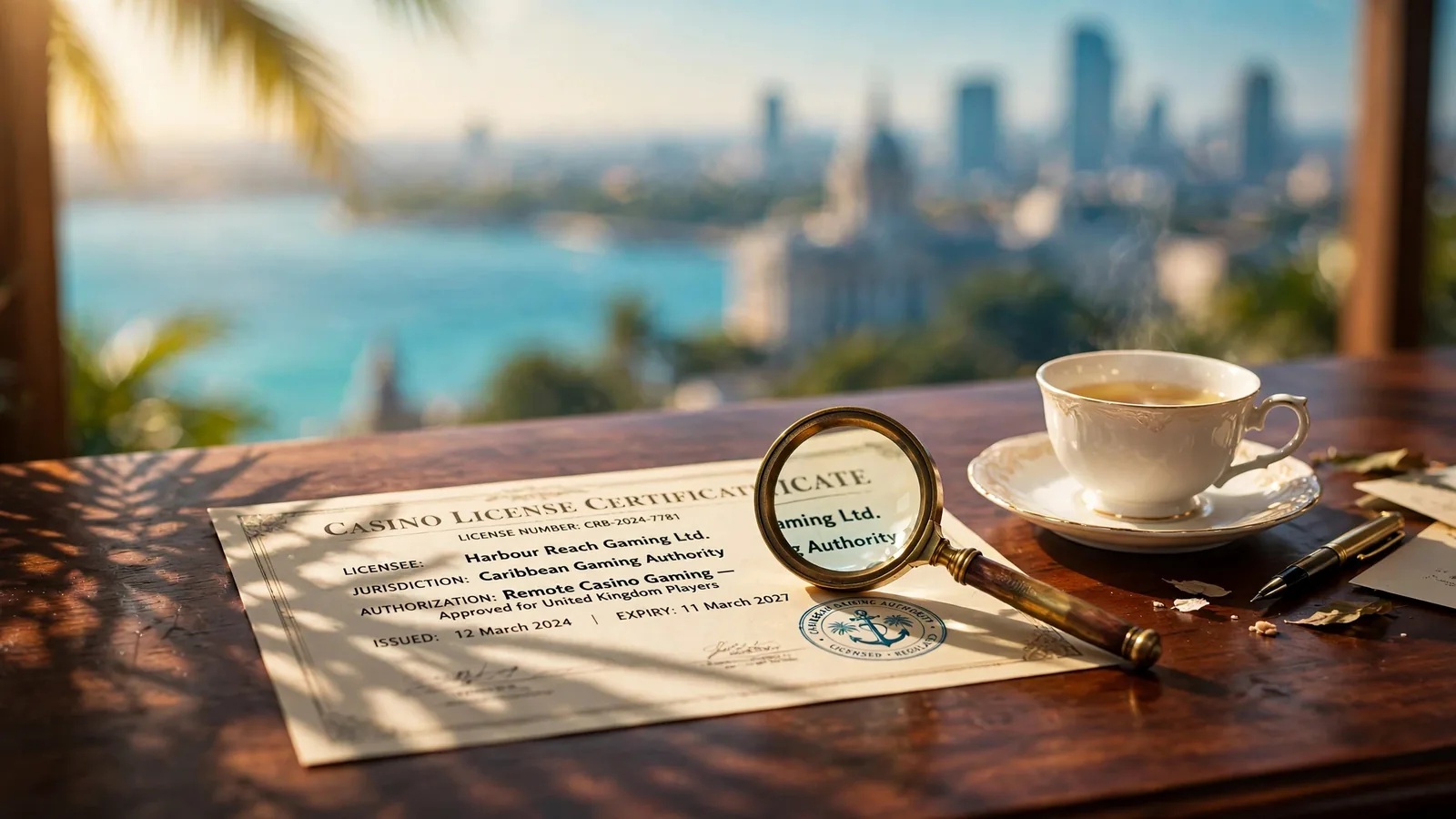
A licence logo on a casino’s homepage is a claim, not proof. If an operator says it holds an Anjouan casino licence, check the public register and compare the entry with the operator’s details. The company name should match, and the licence should still be in date. A near-match or an expired entry is not confirmation that the site you are viewing is covered.
That check has a clear limit: an Anjouan entry does not establish that a casino has a Curacao licence. The jurisdictions are separate, so a Curacao casino licence needs evidence tied to Curacao, not a result from another regulator’s register. If you are trying to work out how to check a Curacao casino licence, make sure the regulator and company named in the evidence actually correspond to the operator. Do not treat a licence from elsewhere as a substitute.
There is another limit worth knowing before you rely on an Anjouan licence. It does not authorise operation in the United Kingdom or other restricted markets. A register entry can help identify what an operator claims to hold; it cannot turn that licence into permission for a market it excludes.
Complaint handling is also narrower than some site wording may suggest. Under Anjouan’s framework, the operator must respond to a complaint within 30 calendar days. That is a response obligation, not a promise that the dispute will be resolved in your favour. The Anjouan authority does not handle, mediate or decide player complaints, and the licence does not provide an independent dispute route comparable to UK-approved ADR.
So keep the checks separate: confirm the named jurisdiction, the registered company and the licence’s validity, then read what the licensing arrangement actually covers. A valid entry is useful information. It is not a universal safety stamp.
Checking a Licence
Verify the Jurisdiction
Confirm the regulator and company named in the evidence correspond to the operator.
Check the Public Register
Compare the company name and check that the licence is still in date.
Review the Coverage
Read what the licensing arrangement actually covers and if it includes your market.
Bonuses, Deposits and the Withdrawal Small Print
A welcome offer can look generous until you read what must happen before you can withdraw. A specialist review has reported offshore welcome bonuses with wagering requirements of 35 times the bonus or more. That is a reported example, not a standard you can assume applies to every casino. Check whether wagering applies to the bonus alone or to the bonus and your deposit, which games count, and whether a deadline or withdrawal cap applies.
A no-deposit offer is not automatically easier to cash out. Its value depends on the conditions attached to it, not just the amount shown on the banner. I would read the bonus terms before accepting, and avoid treating free spins or bonus credit as money you can withdraw immediately. Terms can also change, so check the conditions displayed when you opt in.
Payment options may include credit cards, e-wallets, bank transfers and cryptocurrency, sometimes handled by alternative processors. A payment route that accepts your deposit does not necessarily support withdrawals. Check the cash-out rules separately, including any identity checks and whether the casino requires you to withdraw through a particular method.
Reported withdrawal times do not agree. Some accounts put payouts at 24 hours to 5 business days, depending on the payment method; others warn that delays can stretch to three or four weeks, with no regulatory clock to enforce a payout timetable. Treat the shorter estimate as a possibility, not a promise. Your account may also face extra verification, a frozen balance or withdrawal limits; read the cashier terms and withdrawal policy before depositing.
Crypto deserves a separate thought: it can get around the UK ban on credit-card-funded gambling, but that does not make the transaction protected or the withdrawal straightforward. Keep records of the terms shown when you claim an offer and of your payment activity. If a casino disputes what you are owed, those records may help you explain the issue, but they do not guarantee a resolution. The small print matters.
Curacao and Other Offshore Licensing Jurisdictions
Curacao is one of several jurisdictions associated with non-UK-regulated casinos. Malta, Gibraltar and Anjouan also appear in this wider landscape, but the shared label “offshore” does not mean that their licensing systems work alike.
A Curacao gaming licence belongs to Curacao’s own regulatory framework; it is not interchangeable with a licence issued elsewhere. The same goes for Malta, Gibraltar and Anjouan. Each jurisdiction has its own rules and oversight arrangements, so a casino’s stated location of licensing tells you only which framework it claims to fall under. It does not, by itself, tell you how a particular operator handles player funds, testing or complaints.
Anjouan shows why those differences matter. Its framework does not require casinos to have random number generator testing, audits or segregated player funds. That is a specific limitation of the Anjouan system, not a description of Curacao’s rules. I would not use it to make assumptions about a Curacao casino, either good or bad.
Nor should you treat a Curacao gambling licence as proof that the operator has the same safeguards as a casino licensed in another jurisdiction. The name of a regulator is only a starting point; the terms and protections depend on the relevant system and the operator’s actual arrangements. Dry, but important.
For a UK player, the useful distinction is not simply “offshore” versus “local”. It is that different overseas regulators set different requirements, while their licences are not substitutes for one another. If a site mentions several jurisdictions or uses broad licensing language, read the claim carefully rather than assuming it has one uniform meaning.
In short, Curacao, Malta, Gibraltar and Anjouan belong to the same broad offshore picture, but they should not be bundled together as though one jurisdiction’s documented rules apply to all the others.
Are non-UK-regulated casinos legal for UK players to use?
Yes. UK law does not explicitly prohibit you from using gambling services licensed abroad, and players do not commit a criminal offence by gambling on an unlicensed site. However, operators serving customers in Great Britain need a UK Gambling Commission licence.
Are sites that are not on GamStop legal for players in the UK to access?
Yes, using a site that is not on GamStop is not itself a criminal offence for you. These sites are outside the UK Gambling Commission’s self-exclusion scheme, and operators serving Great Britain need a UKGC licence.
Are gaming sites not on GamStop permitted for UK players?
UK law does not explicitly prohibit you from using these sites, and players do not commit a criminal offence by gambling on them. Not being on GamStop means the site is outside the UKGC’s self-exclusion scheme; it does not establish that the operator is authorised to serve Great Britain.
Is it legal for a UK player to gamble at an Anjouan-licensed casino?
UK law does not explicitly prohibit you from gambling with an overseas-licensed service, and players do not commit a criminal offence by using an unlicensed site. An Anjouan licence does not authorise the casino to operate in the United Kingdom.
Can UK players legally play at casinos licensed in Anjouan?
UK law does not explicitly prohibit you from using gambling services licensed abroad, and players do not commit a criminal offence by gambling on an unlicensed site. An Anjouan licence does not authorise a casino to operate in the United Kingdom.
What happens if I have a dispute with an Anjouan-licensed casino as a UK player?
The Anjouan authority does not handle or adjudicate player complaints, and these casinos do not provide an independent dispute-resolution route comparable to UKGC-approved ADR. The operator is required to respond to complaints within 30 calendar days.