
Trust, but Verify — Every Time
The short answer is that some non-GamStop casinos are reasonably safe and some are not. That is not a hedge — it is the reality of a market where operators range from well-regulated Malta Gaming Authority licensees to nameless platforms running on a Curaçao sub-licence that may no longer be valid. The difference between the two is not always obvious at first glance, which is exactly why a systematic verification process matters more here than it does with UKGC-licensed sites.
When you play at a casino holding a UK Gambling Commission licence, a set of baseline protections is baked in: segregated player funds, mandatory dispute resolution, tested random number generators, and the GamStop self-exclusion scheme. Step outside that framework and those protections become optional. Some offshore operators replicate them voluntarily. Others skip the expensive parts and hope you will not notice until it is too late.
This guide is not a list of recommended casinos. It is a toolkit — a series of concrete checks you can run yourself before depositing a single pound. The goal is to move the question from a vague “is it safe?” to a specific, verifiable set of data points that let you assess an individual platform on its own merits. Because in a market with more than 500 unlicensed operators actively targeting UK players, according to research published by iGaming Business citing Yield Sec data, the ability to tell the good from the bad is not optional — it is essential.
Our top casino picks for the UK
- AmunbetBonus: Join now and get 450% up to 2,700 GBP + 450 FS · Payout speed: 1-3 business days
- SpinFormulaBonus: 550% Up To £15,000 + 550 FS · Payout speed: 1-3 business days
- BeOnBetBonus: 100% up to €500 + 100 FS · Payout speed: 1-3 business days
- BritsinoBonus: Welcome Package – Get your £2,200 + 2,000 FS · Payout speed: 1-3 business days
- ZombillionBonus: Welcome Pack 250% up to £4000 + 200 FS · Payout speed: 1-3 business days
- x3betBonus: Welcome Pack 100% Up to £1.000 + 200 Free Spins · Payout speed: 1-3 business days
- NightWinBonus: £900 + 400 free spins · Payout speed: 1-3 business days
- Revery PlayBonus: 100% up to€1,000+ 100 FS · Payout speed: 1-3 business days
- ChanzeBonus: Slots Welcome Bonus #1 200% up to €500 · Payout speed: 1-3 business days
- NightLuckBonus: Welcome Pack + 805% Up To 6400€ + 280 FS · Payout speed: 1-3 business days
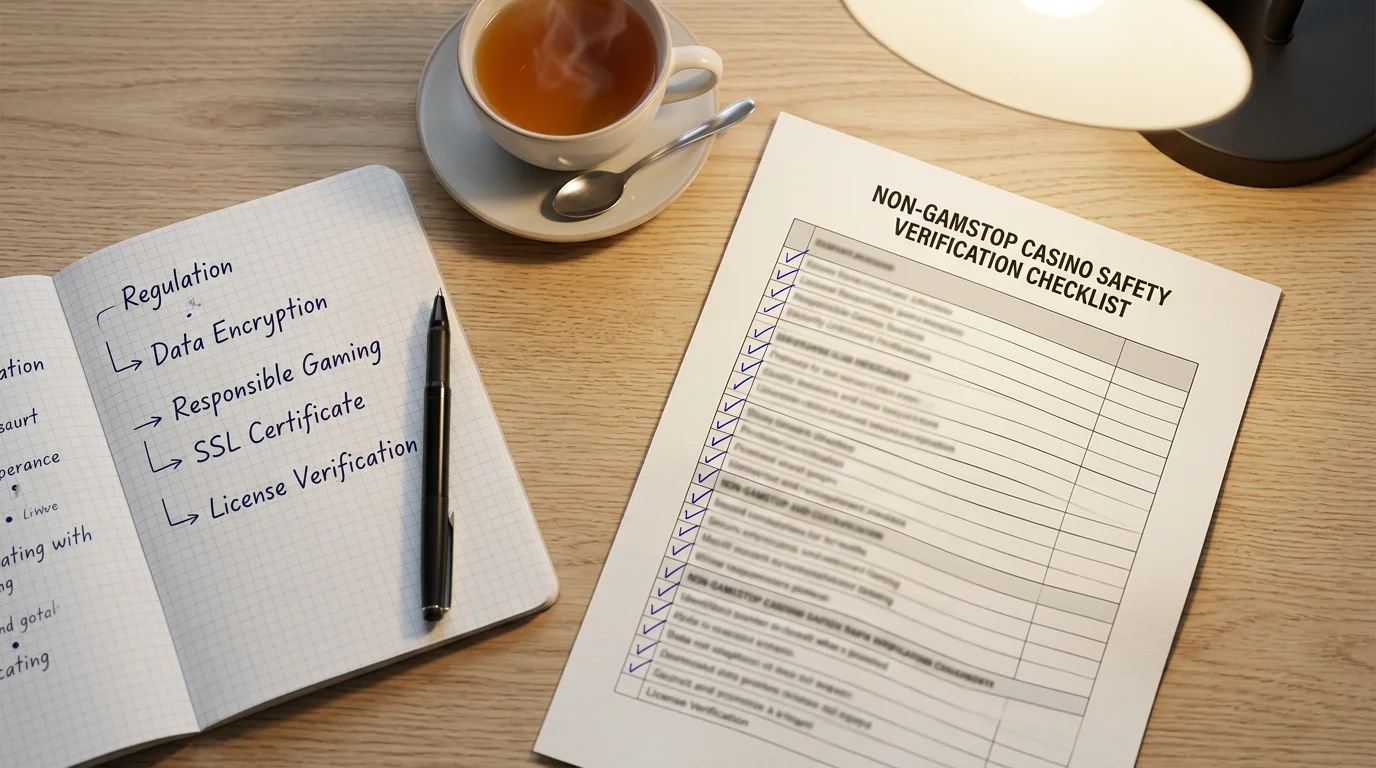
Safety Checklist
Start with the licence. Every legitimate offshore casino will display a licence number and the name of its regulator, usually in the footer. The three jurisdictions you will encounter most often are Curaçao (now under the new CGA framework following the LOK reform), Malta (MGA), and Gibraltar. Each maintains a public register where you can verify that a specific licence number belongs to the company actually operating the casino. If the site shows a licence logo but the number does not appear in the regulator’s database, that is your first and most important data point: walk away.
For Curaçao, verification means checking with the Curaçao Gaming Authority. For Malta, the MGA’s public licence register is searchable online. Gibraltar publishes a list of licensed operators through the Gibraltar Gambling Commissioner’s website. In all three cases, the check takes less than five minutes and costs nothing. There is no excuse for skipping it.
Next, look at fund segregation. UKGC-licensed operators are required to segregate player funds from operational accounts, meaning your balance is protected if the company goes insolvent. Offshore operators are not always held to the same standard. MGA licensees must segregate funds under their licence conditions. Curaçao’s new LOK framework introduces similar requirements, though enforcement is still maturing. If an offshore casino does not clearly state how it handles player deposits — whether in its terms and conditions or on a dedicated page — treat that silence as a warning.
SSL encryption should be a given in 2026, but check anyway. Look for HTTPS in the address bar and verify the certificate covers the domain you are actually on. Some fraudulent sites use valid certificates on lookalike domains, so read the URL carefully. A legitimate casino will also display details of its RNG (random number generator) testing. Independent auditors like eCOGRA, iTech Labs, and GLI issue certificates that operators can publish. If a casino claims fair games but cannot point to a third-party audit, the claim is worth very little.
Player reviews add a layer of real-world data that no regulator’s register can provide. Check TrustPilot, Reddit communities like r/gambling and r/onlinegambling, and specialist forums such as CasinoMeister and AskGamblers. A handful of negative reviews is normal — no operator satisfies every customer. What you are looking for is patterns: repeated complaints about delayed withdrawals, unresponsive support, or changed bonus terms mid-play. Those patterns matter far more than a single angry post.
Finally, test the complaint process before you need it. Every reputable regulator offers some form of player dispute resolution. MGA has a dedicated player support function that logs and investigates complaints. Curaçao’s CGA is building out a similar mechanism. Check whether the casino’s terms specify which ADR (alternative dispute resolution) body handles disputes, and confirm that the named body actually exists. If the terms are vague or point to a non-existent entity, you have your answer.
Red Flags
Certain signals should end your evaluation immediately. The most obvious is the complete absence of any licence information. A casino that displays no regulator name, no licence number, and no jurisdiction is operating in a regulatory vacuum. Even in the loosest offshore frameworks, operators who bother getting licensed want you to know about it. Silence on this point is not modesty — it is concealment.
Withdrawal problems deserve special attention because they reveal more about an operator’s intentions than any marketing page ever will. Legitimate casinos process withdrawals within their stated timeframes, even if those timeframes are slower than you would like. Problematic operators stall. They request additional verification documents after the first withdrawal has already been approved. They impose retroactive wagering requirements. They reduce withdrawal limits after the fact. If player forums consistently report that getting money out of a specific casino is harder than putting it in, that is the clearest possible signal of trouble.
Hidden or frequently changing terms are another reliable indicator. Any casino can have complex bonus conditions — that is normal. But a casino that edits its terms and conditions without notice, or buries critical wagering requirements in sub-clauses that contradict the main offer page, is not operating in good faith. Screenshot the terms before you deposit. If they change materially between your deposit and your withdrawal request, you are dealing with an operator that relies on confusion as a business model.
The sheer scale of the unlicensed market makes vigilance non-negotiable. UKGC data published via G3 Newswire identified 535 unique domains associated with illegal gambling operations targeting UK consumers as of mid-2025 — up from 364 the year before. That growth rate suggests the problem is expanding, not shrinking. Not every offshore casino is on that list, and not every unlicensed site is a scam, but the volume of dubious operators makes a disciplined verification process the only reliable defence.
One more thing worth watching: the age and provenance of the domain itself. A casino that launched last month on a domain registered two weeks prior, with no traceable corporate ownership and a generic template design, is a different proposition from an offshore site that has been operating for five years with a consistent track record. WHOIS lookups are free. Use them.
Conclusion
Safety at non-GamStop casinos is not a binary state — it is a spectrum, and your position on that spectrum depends almost entirely on the work you do before depositing. A valid licence from a recognised jurisdiction, verifiable fund segregation, independent RNG audits, and a clean complaint history do not guarantee a perfect experience, but they dramatically reduce the odds of a bad one.
The checklist above is not exhaustive, and no amount of due diligence eliminates risk entirely. What it does is shift the balance of information in your favour. In a market where hundreds of unlicensed operators compete for UK players alongside genuinely regulated offshore brands, the ability to tell the difference is the single most valuable skill you can develop. Take the five minutes. Run the checks. And if anything fails to add up, move on — there is no shortage of alternatives.
Disclaimer:
This article is provided for informational purposes only and does not constitute legal, financial, or gambling advice. Gambling carries inherent risk, and you should never stake money you cannot afford to lose. If you or someone you know is experiencing gambling-related harm, free and confidential support is available through the National Gambling Helpline on 0808 8020 133, operated by GamCare, or via BeGambleAware.org. The information presented here was accurate at the time of writing but may change as regulatory frameworks evolve.
Are Non-GamStop Casinos Safe? A Verification Guide — More on this topic at casinos not on gamstop.
See also Crypto Casinos Not on GamStop.