
A Cap on the Spin, Not on the Consequences
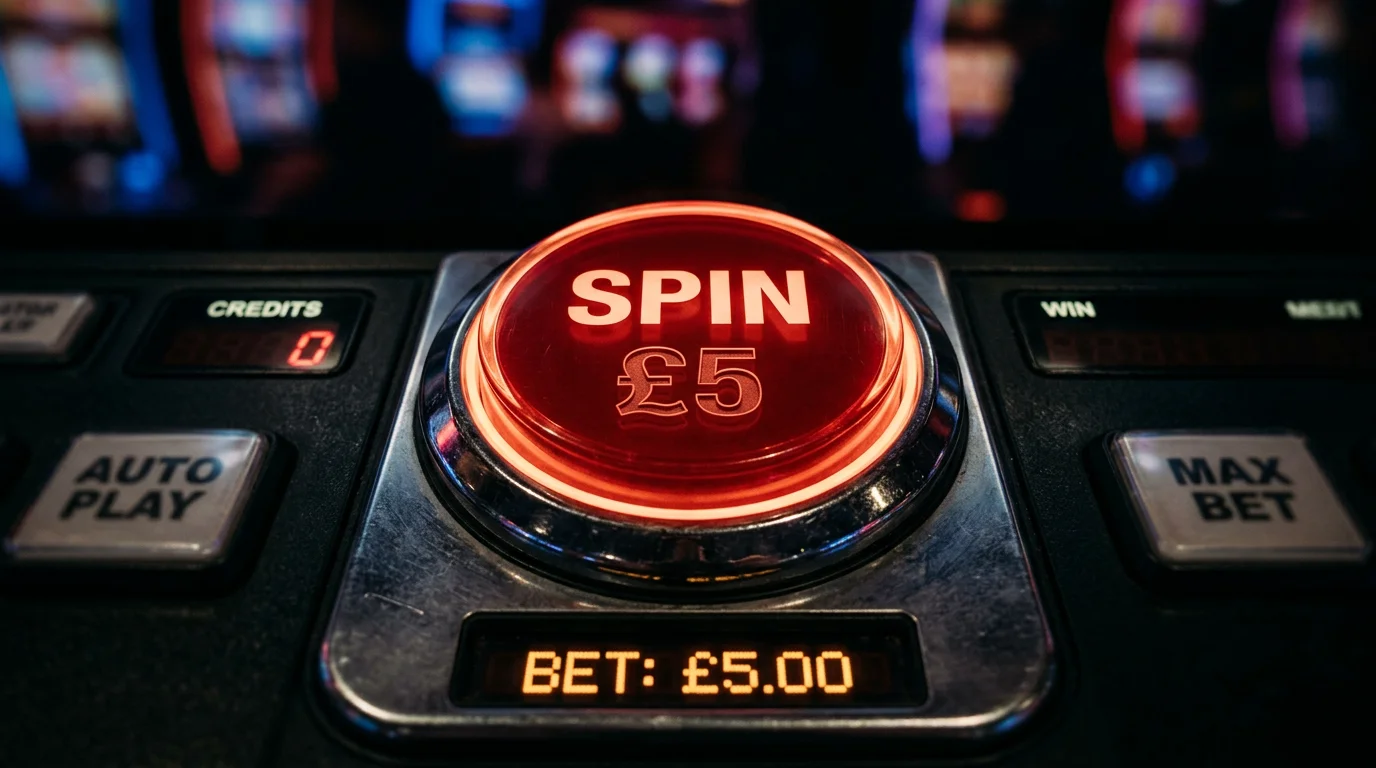
On 9 April 2025, the United Kingdom became the first country to impose a statutory stake limit on online slot machines. The cap — £5 per spin for players aged 25 and over, and £2 per spin for those aged 18 to 24 — applies to every UKGC-licensed operator and represents the most direct regulatory intervention into how much UK players can wager on the single largest revenue category in British online gambling. The measure was announced in November 2024 alongside the statutory gambling levy, both products of the Gambling Act 2005 review process and the subsequent government white paper.
The policy rationale is harm reduction. Online slots are the most closely associated product category with problem gambling in the UK, and the ability to place high-value bets at rapid speed was identified as a structural risk factor. The cap is designed to slow the rate at which vulnerable players can lose money, without banning the product itself. Whether it achieves that goal — and what unintended consequences it creates — is a question the industry is still working through.
Our top casino picks for the UK
- AmunbetBonus: Join now and get 450% up to 2,700 GBP + 450 FS · Payout speed: 1-3 business days
- SpinFormulaBonus: 550% Up To £15,000 + 550 FS · Payout speed: 1-3 business days
- BeOnBetBonus: 100% up to €500 + 100 FS · Payout speed: 1-3 business days
- BritsinoBonus: Welcome Package – Get your £2,200 + 2,000 FS · Payout speed: 1-3 business days
- ZombillionBonus: Welcome Pack 250% up to £4000 + 200 FS · Payout speed: 1-3 business days
- x3betBonus: Welcome Pack 100% Up to £1.000 + 200 Free Spins · Payout speed: 1-3 business days
- NightWinBonus: £900 + 400 free spins · Payout speed: 1-3 business days
- Revery PlayBonus: 100% up to€1,000+ 100 FS · Payout speed: 1-3 business days
- ChanzeBonus: Slots Welcome Bonus #1 200% up to €500 · Payout speed: 1-3 business days
- NightLuckBonus: Welcome Pack + 805% Up To 6400€ + 280 FS · Payout speed: 1-3 business days
How It Works
The stake limit is enforced at the operator level. Every UKGC-licensed casino must ensure that no customer can place an online slot bet exceeding the applicable cap. The limit applies to the total stake per spin, including any multipliers or additional features that increase the bet size within a single game round. It does not apply to the player’s total session spend — you can still play hundreds of spins per session, each at up to the maximum stake.
The age-based differentiation is a distinctive feature. Players aged 18 to 24 are subject to the lower £2 cap, reflecting data from the UKGC’s Gambling Survey for Great Britain showing that this age group has the highest rate of problem gambling. The higher £5 cap applies to players aged 25 and over. The age verification relies on the KYC data already held by the operator — the same identity verification process that determines whether you can open an account determines which stake cap applies to you.
The limit applies exclusively to online slots. Table games — blackjack, roulette, poker — are not covered by the statutory cap, nor are live dealer games or sports betting. The government’s impact assessment specifically identified online slots as the product category most closely linked to gambling harm, based on their combination of high speed, high frequency, and — prior to the cap — unlimited stakes. Bonus-buy features, which allow players to purchase direct access to a slot’s bonus round at a premium, are subject to the same cap: the buy-in price cannot exceed the applicable stake limit.
Implementation followed a phased timeline. The £5 cap for over-25s took effect on 9 April 2025. The £2 cap for 18-to-24-year-olds was introduced on 21 May 2025, reflecting the additional technical work required for operators to implement age-differentiated limits. Both caps are monitored by the UKGC, which has published guidance on compliance and enforcement.
One technical detail that affects gameplay: the cap is per spin, not per game. In slot games with multiple active paylines, the cap applies to the total wager across all lines. A game with 20 paylines and a £5 cap allows a maximum of £0.25 per line. This changes the economic dynamics of certain game designs, particularly those built around high-value single-line bets, and has prompted some providers to adjust their game configurations for the UK market.
Impact on Player Behaviour
The most immediate effect of the stake limit is on session economics. A player who previously wagered £20 per spin at a slot with a 96 percent RTP had a theoretical loss rate of £0.80 per spin. At £5 per spin, that rate drops to £0.20 — a fourfold reduction in the speed at which the house edge erodes the bankroll. For players at risk of harm, this deceleration is precisely the point. For recreational players who managed their spending independently, the cap imposes a constraint on a product they were using without difficulty.
The scale of the affected market is substantial. Online slots generated £4.2 billion in gross gambling yield during the 2024-25 financial year — a 16.7 percent year-on-year increase, according to data compiled by iGaming Expert from UKGC statistics. That figure makes online slots by far the largest single product category in UK remote gambling. Any regulatory intervention affecting this segment has revenue implications for operators, experience implications for players, and — as the industry has been quick to point out — potential migration implications as some players look for platforms where the caps do not apply.
Migration to offshore casinos is the most discussed unintended consequence. Non-GamStop casinos do not enforce UK stake limits — a player can wager £50, £100, or more per spin at an offshore platform without restriction. For players who valued high-stakes slot play and viewed it as a core part of their gambling experience, the cap creates a direct incentive to seek alternatives. The extent of this migration is difficult to quantify precisely, but the timing of the cap’s introduction coincides with continued growth in the offshore gambling market, and industry commentators have drawn a causal connection.
Game selection shifts are another observable effect. With slots capped at £5, some players have redirected their activity towards table games and live dealer products, which remain uncapped. This substitution effect was anticipated in the government’s impact assessment, and it may partly explain the continued revenue growth in the broader remote casino category even as slot-specific regulations tighten. Whether a player switching from £20-per-spin slots to £500-per-hand live blackjack represents a harm-reduction outcome is a question the data has not yet answered.
Provider adaptation is the less visible but equally significant consequence. Game studios that supply UKGC-licensed casinos have had to create UK-specific versions of their slots — capping maximum stakes, disabling bonus-buy features, and removing autoplay functionality. These modified versions coexist alongside the unrestricted originals, which continue to be distributed to offshore casinos. For players who are familiar with the full version of a game and then encounter the UK-restricted variant, the difference in experience can feel substantial, even though the core game mechanics and RTP remain the same. The cap does not change what you can win — it changes how fast you can get there.
Conclusion
The £5/£2 stake limit is a significant regulatory intervention into the UK’s largest online gambling product. It slows the rate at which players can lose money on slots, which is its stated purpose. It also creates friction that pushes some players towards offshore alternatives, changes the game-design economics for providers, and redirects activity towards uncapped product categories. Whether the net effect is positive depends on how effectively the harm reduction among vulnerable players offsets the migration of others towards less regulated environments.
For players, the cap is a fact of the UK-licensed market. If it aligns with your natural playing style, nothing changes. If it does not, the choice is between accepting the constraint or moving to an offshore platform where it does not apply — understanding that the stake limit is only one of many consumer protections you leave behind when you cross that line.
Disclaimer:
This article is provided for informational purposes only and does not constitute gambling, financial, or legal advice. Gambling involves risk, and you should never wager money you cannot afford to lose. If you or someone you know is experiencing gambling-related harm, free and confidential support is available through the National Gambling Helpline on 0808 8020 133, operated by GamCare, or via BeGambleAware.org.
Online Slots Stake Limits UK — More on this topic at casinos not on gamstop.
See also Gambling Levy UK.